Showing posts with label android smartphones. Show all posts

Tuesday, 18 August 2015

Sony Xperia E4 Dual vs Xiaomi Mi 4i: The Winner is Clear

Calling Xperia range as ‘designed to inspire and built to last’, Sony presents the devices in hand as powerful tools to explore, discover and learn. On the other hand, Xiaomi emphasizes the high quality and performance of its devices and introduces an element of exclusivity by adding ‘just for fans’.Irrespective of the way two companies want their devices to be perceived, it is clear that both of them aim to deliver the best at moderate prices. Therefore, it is important to compare Sony Xperia E4 Dual and Xiaomi Mi 4i to find out which of the two makes for a better deal.

Look & Feel
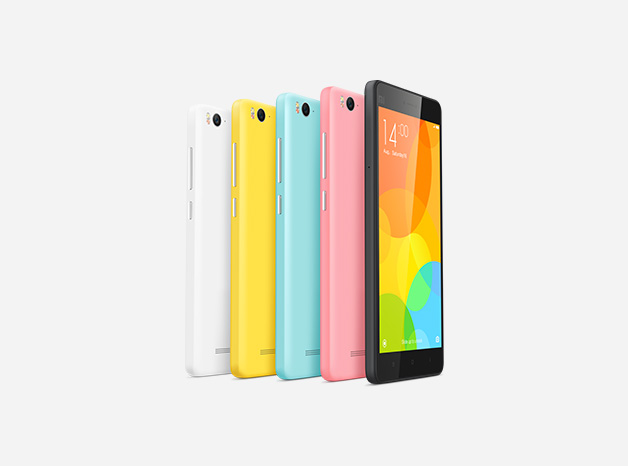
We begin with the design features of the two devices. Sony Xperia E4 Dual measures 137x75x10.5mm and weighs 144g, whereas Xiaomi Mi 4i measures 138.1x69.6x7.8mm and weighs 130g. In general, Xperia is a relatively broader and thicker looking device and with its rounded shape and textured surface gives a sturdier look. Xiaomi, on the other hand, has a relatively sleeker body that may be more comfortable to hold in hand. Also, Xiaomi has used finely textured and matte-sprayed material for resistance to fingerprints and grease. It matte back cover is smooth to the touch and feels great against skin, and fits just right and bendsseamlessly across the sides to meet the front display. Furthermore, while Xperia is out in only black and white, Xiaomi is available in black and white including various other trendy shades like orange, light blue and pink.

Display
On the display front, both the devices come with a screen size of 5 inches, but there is significant difference in pixel resolution that has implications for the quality of images. The Xiaomi device produces 1080x1920 pixel resolution and has a pixel density of 441 pixels per inch whereas the Xperia device comes with only 540x960 pixels resolution and a pixel density of 220 pixels per inch. It is obvious that in terms of crispiness and sharpness, the quality of images produced by Xperia would be somewhat lesser in quality than that of Xiaomi.

Performance
Xperia E4Dual is powered by Mediatek MT 6582 1.3Ghz Quad-core processor, where as Xiaomi Mi4i is powered by Qualcomm Snapdragon 615 1.7GHz Octa-core processor. Xiaomi has definite leg up over Xperia on several counts. Firstly, Mi 4i runs on Android 5.0.2 OS whereas Xperia E4 runs on a slightly older version Android 4.4. Secondly, Mi4i comes with 2GB RAM, which is double of Sony E4 that has 1GB RAM. Thirdly, with 16GB internal storage, Xiaomi is clearly ahead of Xperia E4 that comes with 8GB internal storage. However, it is note worthy that out of the two devices only Xperia provides expansion of storage through MicroSD card up to 32GB. Still, on the whole, Xiaomi leaves Xperia way behind at the performance level.


Additional Features
Camera has become an integral part of smartphone users lives. Moreover, given the love of people for selfies, a good camera can become a key to success easily. Once again, Xperia E4Dual, with its 5MP (rear) and 2MP (front) cameras, lags behind Xiaomi mi 4i that boasts of 13MP (rear) and 5MP (front) cameras. Furthermore, on the battery front, while Xperia has 2300 mAh battery capacity, Xiaomi takes a lead with its 3120 mAh battery capacity. Other add-ons like WiFi, FM, Bluetooth and GPS are available on both the devices. In terms of connectivity, both the SIM cards of Xperia support only 3G Network, while Xiaomi’s dual SIM supports 3G, 4G and 4G LTE networks depending on the market.

Concluding Remarks
We note that Xioami Mi 4i out shines Xperia due to its more advanced OS, bigger RAM, larger internal storage, superior cameras and longer lasting battery. There are distinctive design elements to consider too, such as overall size, shape and the color options to choose from, however, they could be a matter of individual preference.

Last but not the least, we also looked at the price tag on leading Indian e-commerce sites, where Xiaomi Mi4i is priced at around INR12,999 and Sony XperiaE4 Dual is at INR11,290. In spite of slightly higher price, we think Xiaomi offers a much better deal than Sony Xperia E4.

Thursday, 23 July 2015

Lenovo S60 Shoots Ahead of Panasonic Eluga L 4G in the Spec Battle


Lenovo and Panasonic entered the smartphone market about the same time. They have faced lot of ups and downs to attain a certain position in the market and continue to compete with each other. Therefore, in this comparative review, we have picked Lenovo S60, which was launched in January 2015, and Panasonic Eluga L 4G, which was launched in May 2015. Let us find out how the two devices fare in the spec battle.


Design & Display
Lenovo S60 measures 143.3x72x7.7mm and weighs 128g, whereas Panasonic Eluga L comes in relatively higher dimensions of 147.1x73.6x9mm that makes it bulkier as well as heavier 155g. Furthermore, Lenovo is available in three colours including Pearl White, Graphite Grey and Yellow, where as Eluga is only available in Silver. Both the devices have same 5inch display screen with IPS capacitive touch screen and a resolution of 720x1280 pixels.

Processor & OS
Both Lenovo S60 and Panasonic Eluga work on 1.2GHz quad core 64-bit Qualcomm Snapdragon 410 processor. However, the difference lies in operating system (OS) where Lenovo runs on Android OS v4.4 (kitkat) where as Panasonic runs on relatively more advanced OS Android OS, v5.0 (lollipop). However, Lenovo S60 with 2GB RAM outshines Panasonic Eluga which has 1GB RAM, extra RAM ensures multitasking smoothly. Other than that both the devices have same internal memory, which is 8GB, which can be expanded up to 32GB via MicroSD card.

Camera & Battery
S60 Lenovo has 13MP primary (rear) camera with full HD video recording, flashlight and auto focus features and 5MP secondary (front) camera. Panasonic Eluga L, on the other side, has 8MP primary camera with flashlight and auto focus, and a 5MP secondary camera. It is obvious that Lenovo has the primary camera advantage. Moreover, Lenovo S60 has battery capacity of 2150mAh, which works up to 30hours with 2G, 16.5 hours with 3G and 17 hours with 4G. On the other hand, Panasonic Eluga L is on a bit lower side with 2000mAh. The difference is not much, but Lenovo has a slightly advantage over Panasonic Eluga on the battery front too.

Connectivity
Both devices support 3G, wireless LAN available, GPS, V4.0 Bluetooth, micro USB port and tethering which cover all the features of connectivity of modern smartphone. Both have a dual SIM phone, where Lenovo S60 supports regular SIM, Panasonic Eluga L supports micro SIM.

Bottom Line
Lenovo S60 has an edge over Panasonic Eluga L on account bigger display screen, bigger RAM, higher battery capacity and superior primary camera. The disadvantage is that Lenovo is not available on 4G. On the other hand, Panasonic Eluga L takes a leg up over Lenovo S60 on account more advanced OS and its availability in 4G. In terms of price, while Lenovo S60 costs around INR12,500, Panasonic Eluga L costs around INR11,000. Given the differences, the price difference is justified. As such, Lenovo S60 makes for a better deal.

Friday, 10 July 2015

Obi Wolverine S 501 Challenging HTC Desire 210 in Kenya

HTC has made a strong market base in Kenya by introducing mid-range smartphones to high-end smartphones. On the other hand, Obi Mobiles, a company co-founded by John Sculley, ex-CEO of Apple and Pepsi Co set its foot in the Kenyan market in March this year. In spite of being new Obi Mobiles stands a good chance to give HTC a tough competition. To be specific, in this review we are comparing HTC Desire 210 with Obi Wolverine S501 to see what they have to offer in the price tag, say around, KSh 9,000.
Look & Feel:
The biggest difference that we note in the first look is the style and the design. While HTC Desire 210 comes with dimension 125.7X65X10.5mm and weighs 130g, Obi Wolverine S510 has relatively bigger body with dimensions 144X73X9.6mm and weighs 167g. On the whole, HTC 210 is smaller, lighter but also relatively thicker looking device than Obi’s Wolverine. Desire 210 has a metallic body with color variants like black, white and red, on the other hand, Obi Wolverine comes with elegant white and striking black, leather-like cover thus protecting your device from cracks and scratches and adds value to your personality.

Display:
The display screen size of Wolverine S510 is 5.0 inch, offering significantly larger visuals than Desire 210 which has a 4.0 inch screen. Even though the screen type of both the devices comprises of TFT technology with capacitive touch screen, Obi Wolverine has an edge over HTC as it has TFT IPS which provides better color reproduction and greater viewing angle. Furthermore, Obi Wolverine takes a slight lead on the screen resolution with 480X854 pixels providing better display clarity in comparison to HTC’s 480X800 pixels screen resolution. On the whole, Wolverine has a definite leg up over Desire on the display front.

OS and Processor:
HTC Desire 210 runs on Android 4.2.2 Jellybean paired with MediaTek MT6572M 1GHz dual-core processor, whereas Obi Wolverine runs on relatively more advanced Android Kitkat 4.4 operating system packed with MediaTek MT6572M 1.2GHz dual-core processor that gives an accelerated performance. On the performance front too, Obi’s Wolverine acquires an edge over HTC’s Desire 210.

RAM and Storage:
RAM and internal storage is a matter of concern if you are looking forward to many apps and games. Both the devices are configured with 4GB of internal memory, which is expandable upto 32 GB externally. However, Obi Wolverine might impress you more with its 1 GB of RAM in comparison to HTC Desire 210 which comes with 512 MB RAM, about half of the former device. Double the RAM means Obi’s Wolverine will ensure faster performance and run applications relatively more smoothly.

Camera and Battery:
HTC Desire 210 has been designed with 5MP primary camera and a VGA secondary camera which over time has gone out of fashion. On the other hand, Obi’s Wolverine comes with a 5MP primary camera with a LED flash ad is placed in the middle of the device and a 0.3MP secondary camera for selfies. Both the devices are equipped with geo-tagging feature, however, Wolverine additionally comes with features like face detection and Panorama Shot. On the whole, Obi once again has a slight leg up over HTC. On the battery front, both HTC Desire210 and Obi Wolverine S501 have removable batteries with 1300mAh and 1500mAh battery limit respectively. However, Desire 210 offers talktime upto 9 hrs and standby time upto 260 hrs whereas Obi Wolverine gives you talktime upto 6 hrs and standby time upto 180 hrs. While Wolverine has a larger battery capacity, the claim of talk and standby time puts HTC Desire ahead of Wolverine.


Connectivity and other Features:
Both HTC Desire 210 and Obi Wolverine S501 are dual-sim phones, and both the SIM supports 3G in both the devices. Both the smartphones have WiFi, GPS, Bluetooth, FM, 3.5mm audio jack, accelerometer and proximity sensor in common.

Conclusion:
We note that while both the devices are comparable on several accounts, there are some differences too. Obi’s Wolverine has a relatively more advanced OS and processor, secondary camera, larger display and double the RAM, whereas HTC Desire claims longer talk and standby time. The price in the Kenya market also works in favour of Obi Wolverine which is around KSh9000 in comparison to HTC Desire 210 marked around KSh10,000.

However, with a certain brand value, HTC Desire 210 may appeal to those looking for a more handy, smaller looking device, and are not constrained by funds. Where as Obi Wolverine would appeal to those keen on better visual experience while watching videos and playing games, better quality selfies and some style statement. On the whole, we note that other than specific brand priority and design preference, Obi’s Wolverine is a better investment considering the specifications and the price tag.


Features / Specifications HTC Desire 210 Obi Wolverine S501
Dimensions (mm) 125.7 x 65.00 x 10.5 mm 144.00 x 73.00 x 9.60mm
Battery capacity (mAh) 1300 1500
Battery Talk Time(hrs) Upto 9 hrs Upto 6 hrs
Battery Standby Time(hrs) Upto 260 hrs Upto 180 hrs
Colours Black, White, Red White, Black
Screen size (inches) 4 5
Resolution 480x800 pixels 480x854 pixels
Processor 1GHz  dual-core 1.2GHz   dual-core
RAM 512MB 1GB
Rear camera 5-megapixel 5-megapixel, Autofocus
Flash No Yes
Front camera VGA 0.3-megapixel
Operating System Android 4.2 Android 4.4.2
Price Around KSh 9,999 Around KSh 9,000

Wednesday, 8 July 2015

Coolpad Dazen looks cool, but Nubia Z9 Mini has a storage punch

Several Chinese players like Xiaomi, Huawei, Meizu etc. have entered the Indian market and are competing for a slice of the Indian market share. Joining the league are two new Chinese players called Coolpad and Nubia that have recently launched their devices in India. The models are respectively named as Coolpad Dazen X7 and Nubia Z9 Mini respectively. This brief review presents how the two models compare with each other on various standard indicators.

After a careful review, it is noted that both the smartphones are pretty much comparable on display and processor (Android 5.0). The two devices also come with similar 2GB of RAM and 5MP secondary camera. However, there are some definite differences too, particularly related to storage, battery capacity and primary camera. In addition, there is design aspect which is essentially a matter of personal preference. The following slide highlights the key differences between the two devices.


We note that while Coolpad Dazen stands out for its sleeker look and a slightly larger display screen, Nubia acquires a definite edge for having superior OS, more powerful primary camera and, most of all, a much larger storage.

Thursday, 2 July 2015

Micromax Canvas Sliver 5: World’s thinnest smartphone

Micromax, India’s 3rd largest mobile selling company, is in news for launching a smartphone with a tagline “World’s thinnest smartphone”. Micromax Canvas Sliver 5, with 5.1mm thickness, boasts of being the thinnest smartphone in the world. Fascinated by the Micromax claim, we at Brands Dialogue decided to review the device to examine its strengths and weaknesses, if at all.


Design
Canvas Sliver 5 is indeed 5.1mm thick, if we ignore the camera bump on the rear side. In general, the device measures 141.9 x 68.1 x 5.1 mm and weighs just 97g which makes this device not only the thinnest in the world, but probably also among the lightest smartphones ever made, undoubtedly the USP for the company. Needless to say that the device is quite comfortable to hold and carry, if you do not mind the little bumpy bit at the back. In addition, there is a double layer of bright aluminium coating that gives classy look to the smartphone. There are volume rocker buttons on left and power button on right side of the smartphone. The top of the device is clean and on the bottom there is 3.5mm audio jack and micro USB charging port.
Display
Micromax has equipped Canvas Sliver 5 with 4.8 inch HD AMOLED capacitive touch display screen with a resolution of 720x1280 pixels (~306 ppi pixel density), which is pretty much standard now a days. The colours appear to be vibrant and the viewing angles are good. The smartphone is built with Corning Gorilla Glass 3, which makes it relatively scratch free, and it has the propensity to collect smudges. However, this too is becoming pretty much common these days. 
Performance
Canvas Sliver 5 is built with a Qualcomm Snapdragon 410 chipset and has a 1.2GHz quad core processor paired with 2GB RAM and 16GB of internal storage, which are fairly decent. However, the surprise element is that there is no option of MicroSD card, which could prove to be a setback for the device, especially considering that in actual the internal memory is lesser than the indicated one. However, Micromax Sliver is dubbed with the latest Android 5.0.2 Lollipop operating system (OS) and has some pre-loaded apps like Chaatz, clean master, Hotstar, Quikr, Snapdragon etc which can be uninstalled if not needed. 
Battery and Camera
Canvas Sliver 5 comes with fairly decent cameras. It has 8MP rear camera (3264x2448 pixels) with Sony IMX219 and is packed with CMOS Sensor, which apparently helps in preserving battery life. It comes with dedicated professional mode which helps in shooting continuous shots while playing with ISO and white balance etc. It also has 5MP front camera for selfies and this also has access to the professional mode features. On the battery front, Sliver 5 comes with 2000 mAh lithium polymer battery which gives up to 345h of standby time and 8h of talk time, which is also fairly decent. The smartphone comes with SIM 4G LTE connectivity and takes Nano SIM Card into it. In addition, there are other standard features such as Wi-Fi 802.11n, Bluetooth 4.0 and GPS for the users.


Conclusion
Micromax has undoubtedly done a great job in pulling out a device with distinctive design, good specifications and an industry first, the thinnest smartphone in the world, with a price tag of around INR18,000 in the Indian market. It’s slimness and light weight are sure attractions for the customers. However, absence of external storage option is a drawback. Moreover, with the brand history of manufacturing low cost phones, Canvas Sliver 5 may be viewed as being a bit highly priced.

Wednesday, 3 June 2015

Huawei Ascend sure has an edge over Obi Octopus, but for a price

Huawei has been an established player in the global smartphone market, where as Obi Mobiles, co-founded by ex-PepsiCo and Apple CEO, John Sculley, is a relatively new player that has rapidly expanded its foot prints across India, Middle East and Africa. In many countries, Obi’s devices are now directly competing with established players like Huawei.  Therefore, in this comparative review we have decided to focus on two impressive smartphone models, i.e. Huawei AscendG750 and Obi Octopus S520, even when we realise that Huawei’s Ascend is pegged at a much higher price point than Obi Octopus.
Let us get to the design first. Both Obi’s Octopus S520 and Huawei’s G750 are bar shaped smartphones that are curved at all the ends. Obi’s Octopus comes in 145x75x8.4mm dimensions, where as Huawei’s Ascend is 149.5x77.4x8.9mm which makes the device comparatively larger (It is important to note that Huawei’s official website does not provide the dimensions of the device, and the aforementioned stats have been sourced from Fone Arena). The overall size reflects in the display screen size which in case of Octopus is 5” with TFT technology and in case of Ascend it is 5.5” inch HD IPS display, which provides Ascend an edge but only in terms of size as both the devices have similar resolution i.e. 720x1280pixels. Moreover, while Huawei’s Ascend comes in textured plastic back cover, Obi’s Octopus has a full-aluminium back cover.

Both the devices are powered by 1.7 GHz Octa-Core processor and built on MTek chipsets, however, Obi’s Octopus acquires an edge in terms of its more advanced operating system (OS) Andriod 4.4.2, while Huawei’s Ascend comes with OS Andriod 4.3. However, Ascend takes a leg up with its 2GB of RAM which is 1 GB in case of Octopus. In addition, both the devices provide an internal storage of 8GB which is expandable up to 32GB via MicroSD card. Therefore, essentially the choice is between a more advanced OS and larger RAM. If a customer is more keen on having a device that provides better user interface, Obi’s Octopus has an edge otherwise RAM advantage lies with Huawei.
Looking at the additional features, we note that Obi Octopus S520 has an 8MP primary (rear) camera by Sony that records videos in 720p HD and a 2MP secondary (front) camera. On the other hand, Huawei Ascend G750 comes with a 13MP primary (rear) camera by Sony and a 5MP secondary (front) camera, thereby, acquiring an outright edge over Obi’s Octopus. Huawei’s lead continues at the battery front too, where it boasts of 3000mAh battery power over Obi’s Octopus, which comes with a lower 1800mAh battery power with 3.7V capacity, however, Obi has the advantage of having a removable battery that means one can replace the existing battery with the one having higher capacity.

On the connectivity front, both the devices support Bluetooth 4.0, GPS, WiFi 802.11 b/g/g and a micro USB port, and have dual SIM cards. However, in case of Obi’s Octopus both the cards are 3G enabled, where as Huawei Ascend has only one SIM that is 3G enabled. On the whole, we note that Huawei Ascend has an edge over Obi Octopus in terms of larger RAM and display screen, superior cameras and higher battery capacity, where as Obi Octopus S520 boasts of advanced operating system (OS), removable battery feature and two 3G enabled SIM cards. However, if we look at the price tag in the Indian market, Huawei’s Ascend costs about INR18,000, where as Obi’s Octopus is priced at around INR10,000. 

In this context, going by the major specifications, Huawei Ascend G750 sure has an edge, however, if the customer choice is to be led by the finances, in comparison, Obi Octopus S520 turns out to be a good deal too.