Showing posts with label xperia. Show all posts

Tuesday, 18 August 2015

Sony Xperia E4 Dual vs Xiaomi Mi 4i: The Winner is Clear

Calling Xperia range as ‘designed to inspire and built to last’, Sony presents the devices in hand as powerful tools to explore, discover and learn. On the other hand, Xiaomi emphasizes the high quality and performance of its devices and introduces an element of exclusivity by adding ‘just for fans’.Irrespective of the way two companies want their devices to be perceived, it is clear that both of them aim to deliver the best at moderate prices. Therefore, it is important to compare Sony Xperia E4 Dual and Xiaomi Mi 4i to find out which of the two makes for a better deal.

Look & Feel
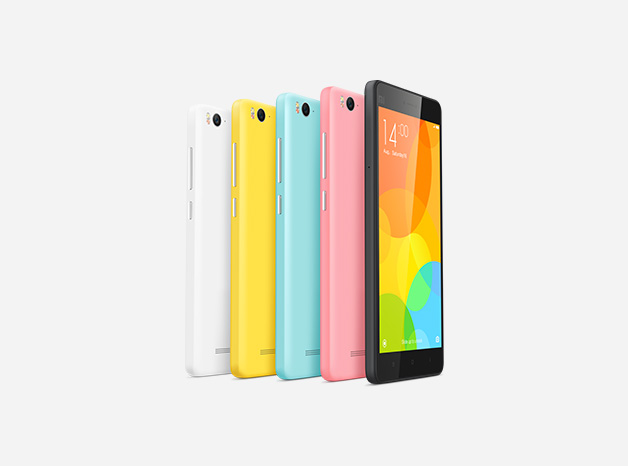
We begin with the design features of the two devices. Sony Xperia E4 Dual measures 137x75x10.5mm and weighs 144g, whereas Xiaomi Mi 4i measures 138.1x69.6x7.8mm and weighs 130g. In general, Xperia is a relatively broader and thicker looking device and with its rounded shape and textured surface gives a sturdier look. Xiaomi, on the other hand, has a relatively sleeker body that may be more comfortable to hold in hand. Also, Xiaomi has used finely textured and matte-sprayed material for resistance to fingerprints and grease. It matte back cover is smooth to the touch and feels great against skin, and fits just right and bendsseamlessly across the sides to meet the front display. Furthermore, while Xperia is out in only black and white, Xiaomi is available in black and white including various other trendy shades like orange, light blue and pink.

Display
On the display front, both the devices come with a screen size of 5 inches, but there is significant difference in pixel resolution that has implications for the quality of images. The Xiaomi device produces 1080x1920 pixel resolution and has a pixel density of 441 pixels per inch whereas the Xperia device comes with only 540x960 pixels resolution and a pixel density of 220 pixels per inch. It is obvious that in terms of crispiness and sharpness, the quality of images produced by Xperia would be somewhat lesser in quality than that of Xiaomi.

Performance
Xperia E4Dual is powered by Mediatek MT 6582 1.3Ghz Quad-core processor, where as Xiaomi Mi4i is powered by Qualcomm Snapdragon 615 1.7GHz Octa-core processor. Xiaomi has definite leg up over Xperia on several counts. Firstly, Mi 4i runs on Android 5.0.2 OS whereas Xperia E4 runs on a slightly older version Android 4.4. Secondly, Mi4i comes with 2GB RAM, which is double of Sony E4 that has 1GB RAM. Thirdly, with 16GB internal storage, Xiaomi is clearly ahead of Xperia E4 that comes with 8GB internal storage. However, it is note worthy that out of the two devices only Xperia provides expansion of storage through MicroSD card up to 32GB. Still, on the whole, Xiaomi leaves Xperia way behind at the performance level.


Additional Features
Camera has become an integral part of smartphone users lives. Moreover, given the love of people for selfies, a good camera can become a key to success easily. Once again, Xperia E4Dual, with its 5MP (rear) and 2MP (front) cameras, lags behind Xiaomi mi 4i that boasts of 13MP (rear) and 5MP (front) cameras. Furthermore, on the battery front, while Xperia has 2300 mAh battery capacity, Xiaomi takes a lead with its 3120 mAh battery capacity. Other add-ons like WiFi, FM, Bluetooth and GPS are available on both the devices. In terms of connectivity, both the SIM cards of Xperia support only 3G Network, while Xiaomi’s dual SIM supports 3G, 4G and 4G LTE networks depending on the market.

Concluding Remarks
We note that Xioami Mi 4i out shines Xperia due to its more advanced OS, bigger RAM, larger internal storage, superior cameras and longer lasting battery. There are distinctive design elements to consider too, such as overall size, shape and the color options to choose from, however, they could be a matter of individual preference.

Last but not the least, we also looked at the price tag on leading Indian e-commerce sites, where Xiaomi Mi4i is priced at around INR12,999 and Sony XperiaE4 Dual is at INR11,290. In spite of slightly higher price, we think Xiaomi offers a much better deal than Sony Xperia E4.

Friday, 29 May 2015

Sony Xperia Z3+ and LG G4: Differently close

Thinking about upgrading your smartphone? LG and Sony have released a strong line-up of their flagship android mobiles, namely the LG G4 and Sony Xperia Z3+. If you’re confused about which one to splurge on, we have rounded up these two for a spec-to-spec comparative review so you can make a well-informed decision. Read on!
Beginning with the design of both the models, Sony’s Z3+ comes in dimensions of 146.3 x 71.9 x 6.9mm and weighs 144g whereas LG’s G4 is 148.9 x 76.1 x 9.8 mm and weighs 155g, making LG G4 slightly bigger looking and heavier too. LG G4 is available in two different back materials that is, real leather (black, brown, red) and plastic (grey, white) with curved edges, it has also opted to shift the control buttons to the back panel instead of the usual side panel. On the other hand, Sony’s Xperia Z3+ is comprised of a waterproof and dust-proof glass and aluminium frame with a rectangular shape and comes in four colors, including black, copper, white and aqua.

Moving on to display, LG G4 has a screen size of 5.5’’ with an IPS LCD and Corning Gorilla Glass 3 protection while the Sony Xperia Z3+ gives us the usual 5.2’’ IPS LCD display with scratch resistant screen technology and an oleophobic coating.  The LG G4 packs resolution of 2560 x 1440 that equals 538 ppi, which makes it one of the few phones to offer such high resolution and pixel density. Sony’s Z3+ has a resolution of 1920 x 1080 with a pixel density of 424ppi and makes use of their proprietary TRILUMINOS technology that produces bold and clear images. Given its larger display screen and considerably higher resolution, enhancing the quality of visual experience, LG G4 acquires a certain edge over Sony’s Z3+, which at least in screen size is not far behind.

Both models run on the Android OS, while LG G4 runs on v5.1, Sony’s Z3+ runs on v5.0. LG’s G4 is powered by a Hexa-core, Qualcomm Snapdragon 808 central processing unit, and clocks in 1.8 GHz’s of processing power with a 3GB RAM, Sony’s Z3+ runs on Qualcomm’s Snapdragon 810 with Octa-Core and a 2.0 GHz processing power and an equal 3GB RAM. Therefore, at the chipset front, both the models are neck to neck.
Coming to the memory, both have 32 GB of internal memory, however LG G4 is expandable to a massive 2 TB of external memory, although how this would affect the performance and smoothness of the smartphone remains to be seen. On the other hand, Sony Xperia Z3+ is non expandable. Therefore, the choice could depend on individual requirement, although both the models provide same ready availability of memory.

Furthermore, while LG’s G4 has upped their rear camera to 16MP, which is impressive, Sony Xperia Z3+ takes a leap with 20.7MP rear camera, however, LG G4 makes it up in the front camera with 8MP, which in case of Sony Xperia Z3+ is 5MP. Both models provide optimal image stabilisation, two-tone LED flash. Our conclusion is that the Sony’s slightly stronger rear camera and waterproof technology may have provided it a leg up, but if you are looking for superior selfie LG G4 has an edge. On the battery front, LG’s G4 has a removable 3000mAh battery with Sony’s Xperia Z3+ close behind with a 2930mAh non-removable battery, which is almost comparable.

Therefore, while LG G4 has an edge in terms of offering better visual experience, a massive expandable memory, a superior front camera and a slightly more advanced operating system, Sony Xperia Z3+ tries to make up with a superior rear camera, water and dust proof glass and a relatively sleeker look. Considering that the two models are priced about the same, the cost tag may not be a deciding factor while making a choice between the two devices.

Monday, 11 May 2015

Sony Xperia Z2 and LG G3 competing for attention in Africa

Sony Xperia Z2 and LG G3 are two models among the high end smartphones that are currently competing for attention in the African market. Both Sony and LG have put together quality devices that are very close in spec-to-spec match, but may appeal to customers with different tastes. If Sony Xperia Z2 stands out as a device with a style statement of power and strength, LG G3 seems a device designed with user experience and how-it-feels factor in the mind. Let us see how the spec-to-spec match unfolds, while we make sense of what the two established players may have had in their minds.   

In spite of having slightly larger stats, LG G3 (size: 146.3x74.6x8.9mm) weighs 149gms, about 14gms lesser than Sony Xperia Z2 (size: 146.8x73.3x8.2mm) that weighs 163gms, indicating the type and quality of materials used and perfection achieved. While LG's G3 comes with a plastic build trying to emulate a metallic back, Sony's Z2 comes in a full glass back and aluminium edges with claims to be completely dust and water proof. Sony Z2’s hard-edged rectangular shape may not appeal to some for the hand grip it allows, while LG’s G3, given its curved shape, may attract those more keen on how it feels in the hand experience. The choice is essentially between Sony Z2, a compact, handsome and a bit erect looking device that comes in black, white and purple, and LG G3 with its plastic body that feels more comfortable in hand and is available in great variety of colours such as metallic black, silky white, shine gold, moon violet, burgundy red and blue steel.
Sony Xperia Z2 and LG G3 offer IPS-LCD capacitive touchscreen technology, but minor differences lie in display screen size and type. While Z2 provides a 5.2inch display with shatter proof glass technology, which seems a plus for those who tend to be a bit clumsy with their phones, G3 has a 5.5inch gorilla glass 3 display screen. The key difference is that LG G3 packs a pixel count of 2560x1440 that equals 538 ppi, making it one of the few smartphones to offer such high resolution and pixel density. Sony’s Z2 with 1920x1080 resolution with a pixel density of 424ppi seem to fill the gap by using Triluminous technology which apparently produces bold and clear images. However, with its sheer amount of pixels, LG’s G3 has a definite leg up on Sony’s Xperia Z2.


Both the devices run on Android OS (KitKat) v4.4.2 and are powered by a Quad-Core Qualcomm Snapdragon 801 central processing unit. However, while LG G3 clocks in a 2.5GHz processing power and a 2GB RAM, Sony Xperia Z2 is a close second with 2.3GHz but offers a higher 3GB RAM. In addition, both the devices have expandable memory up to 128 GB, a definite plus. On the battery front, Sony weighs over LG slightly: LG’s G3 has a removable Li-Ion 3000 mAh battery giving up to 21hours talk time on 3G and Sony’s Z2 has a non-removable Li-ion 3200 mAh battery that provides 19hours of talk time on 3G. Both the devices come very close at the performance level, where higher RAM may work to the advantage of Sony Z2.

Furthermore, LG G3 has a respectable 13MP primary camera with optimal image stabilisation, two-tone LED flash and a laser autofocus system, which helps the device to “lock” subjects more accurately. However, Sony’s Z2 has a whopping 20.7MP primary camera, an outright advantage. Both the devices have comparable secondary cameras of 2.1MP and 2.2MP respectively. However, Sony Xperia Z2’s powerful camera combined with its waterproof technology provides it a sure leg up over LG’s G3. Finally, we have also looked at the price tag in the Kenya market, where it seems Sony Xperia Z2 price has moved over time from over KSh48,000 to about KSh38,000, where as LG’s G3 is priced at around KSh41,000.

In the above context, customers may have to chose between a compact, handsome looking device with water proof technology and a very powerful rear camera in somewhat serious looking colours and a device with a more comfortable form to handle, a larger display screen with very high resolution and pixel density enhancing the viewing experience, whose colour range could even beat a peacock. It seems as if the real choice is between power and security on one hand and viewing experience, feel and comfort on the other hand.