Showing posts with label india. Show all posts

Sunday, 29 November 2015

NDTV Gadgets 360 to release Obi Worldphone SF1

NDTV Gadgets 360 to release Obi Worldphone SF1 Obi Worldphone has finally released its first flagship device, SF1 in India, through NDTV Gadgets 360. SF1 is named after the city San Francisco, the place where it was designed, and it is also the first in its series. Its sibling SJ1.5 is soon to follow. The much talked about design endeavour of the company sounds convincingly innovative when we take a look at the device. It is rich, dark, and handsome and is now available at an attractive price too. SF1 is available in two variants, 2GB RAM/16GB and 3GB RAM/32GB internal storage at INR 11,999 and INR 13,999 respectively. Both the variants offer expandable storage up to 64GB.


The San Francisco based design studio Ammunition Group partnered with Obi in designing the phones right from its unique UI called Lifespeed, to its every curve and detail. This is reflected in the raised floating glass 5” screen intended to give a distinct look and also a more engaged experience with the phone. Besides, the glass is further protected by Corning Gorilla Glass 4 and metallic accents at both top and bottom. The Oleophobic coating also prevents from fingerprint smudges and marks. The high Young’s Module makes the device prone to bending and breaking. SF1 comes in the classic black hue which stands rich in contrast to its orange-pink UI.

SF1 comes as a unibody device where the battery is non-removable. The device measures 146x74x8.1mm and weighs 147g. The display is HD with in-cell JDI technology and has 1080x1920, 443ppi resolution. It runs on Android 5.0.2 Lollipop, powered by Qualcomm MSM 8939 64-bit Snapdragon 615 with 1.5GHz Octa-core clock speed. It has 3000mAh battery power with the Quick charge feature. On the multimedia front, SF1 comes with Dolby Surround sound. The rear snapper is 13MP and has a Sony IMX214 sensor with f/2.0 aperture. The front snapper is 5MP and the camera is further supported with Ubi Focus, Opti Zoom and Chroma Flash.

The device is dual SIM and supports most of the connectivity options like WLAN direct Wi-Fi 802.11 a/b/g/n, Dual Band, Bluetooth (v4.0 A2DP) and GPS with GLONASS. Also one can use it right out of the box as it comes equipped with AVG Antivirus software. Also the design theme of the company extends to its custom designed see through packaging. Considering that Apple Alumni John Sculley and Robert Brunner have together envisioned Obi Worldphone, Indian consumers can surely expect something exceptional here.

Wednesday, 22 July 2015

Lenovo K80 Simply Outshines Asus Zenfone 2

Asus and Lenovo moved many eyelids across the globe when they announced smartphones with 4GB RAM. Lets’ find out how the two first 4 GB Devices i.e Asus Zenfone 2 ZE551ML and Lenovo K80 compare with each other. 


Starting with dimensions Asus Zenfone size is 152.5x77.2x10.9mm and it weighs around 170gm, where as Lenovo K80 is 150.0x77.2x8.50mm and weighs 158gm. However, there is no difference in the display screen size and quality as both the devices come with 5.5” Full HD (1080p) IPS LCD capacitive touch screens. Both the devices run on Android 5.0 Lollipop operating system (OS). The most important feature is the 4GB RAM that allows both device for faster switching between various applications. In the sea of similarities the only distinguishing factor is the slight difference in the processor where Asus Zenfone acquires a slight edge in processing capacity as it powered by Intel Atom 2.3 GHz Quad-Core processor that offers a slightly better clock speed than Lenovo K80 which is powered by Intel Atom 1.8 GHz Quad-Core processor. Both devices have 13 megapixel rear cameras with LED flash and 5 megapixel front cameras with a fixed focus.

As far as connectivity is concerned both have Wi-Fi capabilities (802.11 a/g/b/n/ac), Bluetooth v4.0 and dual SIM slot. In terms of connectivity, both devices are available in 2G, 3G and 4G, depending on the market. In the Indian market, Asus Zenfone is priced at around INR23,000, where as Lenovo K80 is around INR17,000.

Thursday, 9 July 2015

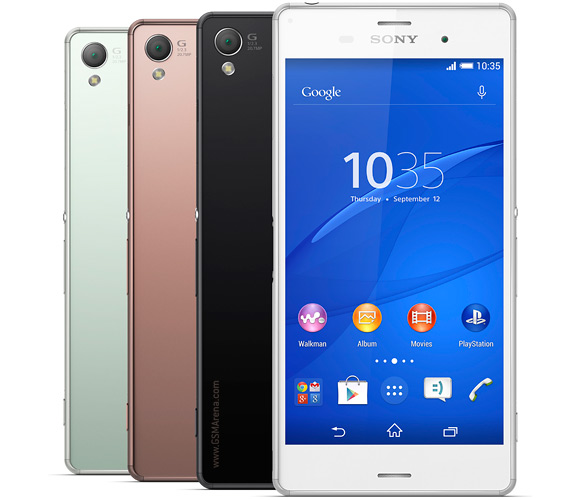
Motorola Google Nexus 6 vs Sony Xperia Z3

Although once a pioneer in cell phones, Motorola, together with Google, has begun almost like a fresher in the smartphone business. On the other hand, Sony too join the smartphone business a bit late, but now has an impressive Xperia smartphone line up. Therefore, we have picked up two handsets from these companies, namely Motorola Google Nexus 6 and Sony Xperia Z3, for this comparative review.
BUILD
Motorola Google Nexus 6 measures 159.3x83x10.6mm and weighs 184g, whereas Sony Xperia Z3 is a visibly much smaller device that measures 146x72x7.3mm and weighs about 152g. Besides, Google Nexus6 is accessible in two distinct hues, midnight blue and cloud white, where as Sony Xperia offers four color options to choose from including dark, white, copper and gold.

DISPLAY 
Motorola has a screen size of 5.96inch with a capacitive touch screen accompanied by Corning Inc’s Gorilla Glass 3, where as Sony comes with a relatively smaller display screen size of 5.2 inch with a capacitive display followed by Triluminos display. Moreover, Nexus6 has a significant leg up with 1440 x 2560 pixels over Xperia Z3 that has 1080 x 1920 pixels. Both the devices come with waterproof and dust tight display. On the whole, at the display front, Xperia Z3 with bigger screen and sharper pixels acquires a leg up over Google Nexus6.

PROCESSOR & OS 
Both the devices have 3GB RAM and run on Android v5.0 (lollipop) OS. Considering the processor, Google 6 is powered with 2.7 GHz Quad-Core Qualcomm Snapdragon 805, which is slightly more powerful than Xperia Z3 powered by 2.5 Ghz Quad-Core Qualcomm Snapdragon 801. In spite of the fact that both the contraptions run on the same OS, Google Nexus6 gives a relentless rivalry to Z3. Furthermore, Sony Xperia Z3 provides 16GB internal storage, which is expandable up to 128 GB with a microSD card. Nexus 6, on the other hand, provides much higher 32 GB internal storage, but provides no option to expand, which is a relative weakness.
CAMERA & BATTERY
On the camera front, Sony’s Xperia Z3 takes a lead with a whopping 20.7 megapixels (rear) camera that in case of Motorola’s Nexus 6 is only respectable 13 megapixels. However, the front camera in both cases is 2.2 megapixel. However, the battery capacity advantage lies with Google Nexus 6 that has 3220 mAh battery, slightly more powerful than Xperia which comes with 3100 mAh battery.

OTHER FEATURE & PRICE 
In terms of connectivity, both the gadget bolsters 802.11 a/b/g/n/air conditioning Wi-Fi guidelines. They also support 3G/ 4G, NFC and GPS. However, Motorola can disappoint buyers by not supporting FM, something that Sony does. Considering the Bluetooth facility Google came up with v4.10, which is a slightly advanced version than Xperia v4.00. Both the gadgets are accessible on a few India-specific e-business sites and cost about the same, around INR 38000-40000.

BOTTOM LINE 
Both the devices are comparable on most accounts. On one hand, Motorola Google Nexus 6 has a favorable position because of wider screen size with sharper pixels, higher battery capacity and a propelled processor, which offers better viewing experience and faster data processing. On the other hand, Sony Xperia Z3 takes the attention because of its much stronger rear camera, expandable storage option and FM facility, which could work better for people with larger data storage requirements.

Wednesday, 8 July 2015

Coolpad Dazen looks cool, but Nubia Z9 Mini has a storage punch

Several Chinese players like Xiaomi, Huawei, Meizu etc. have entered the Indian market and are competing for a slice of the Indian market share. Joining the league are two new Chinese players called Coolpad and Nubia that have recently launched their devices in India. The models are respectively named as Coolpad Dazen X7 and Nubia Z9 Mini respectively. This brief review presents how the two models compare with each other on various standard indicators.

After a careful review, it is noted that both the smartphones are pretty much comparable on display and processor (Android 5.0). The two devices also come with similar 2GB of RAM and 5MP secondary camera. However, there are some definite differences too, particularly related to storage, battery capacity and primary camera. In addition, there is design aspect which is essentially a matter of personal preference. The following slide highlights the key differences between the two devices.


We note that while Coolpad Dazen stands out for its sleeker look and a slightly larger display screen, Nubia acquires a definite edge for having superior OS, more powerful primary camera and, most of all, a much larger storage.

Monday, 6 July 2015

Videocon Z51 Nova is a better deal than Intex Aqua Q4

Of late, two Indian companies, Videocon and Intex, have ventured into smartphone industry, with a particular focus on producing budget smartphone devices. To help budget smartphone seekers, this comparative review focuses on Videocon Infinium Z51Nova and Intex Aqua Q4 to see what they bring to the table for the similar price tag they carry, about INR 5,000. 
DESIGN & DISPLAY:
While Infinium Z51 Nova is available in blue and grey, Intex Aqua Q4 comes in more colour variants including black, white, grey and champagne, thereby, providing more colour choices. While Z51 Nova, measuring 133.5x65x8.5mm, is a bit longer than Intex Aqua that measures 133x67.5x9.7mm, it is lesser in width and thickness than Aqua that makes Nova look sleeker than Aqua. Moreover, Nova (131g) also weighs lesser than Aqua (140g). Furthermore, while both the devices come with capacitive touch screen and produce 480x854 pixels resolution, Videocon’s Nova takes a lead due to its larger display screen size, that is 5inch in comparison to Intex Aqua’s 4.5inch display screen. On the whole while Nova stands out for its sleeker look and larger display screen size, Aqua attracts with more colour options.

PERFORMANCE:
Both the gadgets run on Android 4.4.2 Kitkat operating system (OS) and are powered by 1.2Ghz Quad Core processor. However, the devices have an alternate chipset. While Videocon’s Nova accompanies Quad Core chipset, Intex Aqua Q4 comes with Spreadtrum SC7731, which gives Nova a slight leg up. However, major differences are at the level of RAM and internal storage. Firstly, with 1GB RAM, Nova Z51 has an edge over Aqua Q4 that has 512MB RAM. If you are looking forward to have many apps and games, lesser RAM is a constraining factor in running applications smoothly. Secondly, Videocon Z51 Nova comes with 8GB internal storage, where as Intex Aqua Q4 has only 4GB internal storage, though both are expandable to 32GB. Therefore, Vidiocon Nova has definite leg up in both RAM and internal storage.
BATTERY & CAMERA:
Both the devices are practically identical on the camera out of this world, with 5 megapixel (Rear) cameras and 2 megapixel (Front) cameras with LED Flash and autofocus. But still Infinium Z51 Nova takes an edge due to additional features like face detection, Geo tagging and Panorama Shot. Besides, another critical marker is the battery capacity. Once again, Videocon Infinium Z51 Nova, with its 2000mAh battery capacity, offers longer talk time than Intex Aqua Q4 that comes with 1800 mAh battery limit.

ADDITIONAL FEATURES:
Other facilities like Wi-Fi, Bluetooth, GPS, FM, 3.5mm audio jack and so forth are all accessible in both the devices that have Proximity Sensor and Accelerometer in common. As far as integration, both gadgets are accessible in 3G. Furthermore, Z51 Nova is pre-loaded with apps like Opera Mini, Email, V-Safe and V- Secure which is anti-virus software is given for free for 90 days. On the other hand, Aqua Q4 is pre-loaded with apps like Intex Zone, Opera Mini, OLX, Intex Service, Clean Master, Ask Me, Newshunt and Empire Defence.

CONCLUSION:
We note that both the devices are comparable on display technology and resolution, operating system, cameras and several other additional features. However, Videocon’s Z51 Nova acquires a leg up over Intex’s Aqua Q4 on account of larger display screen-size, greater RAM, bigger internal storage and higher battery capacity, besides being relatively sleeker looking device.

There are unmistakable outline components as well, which incorporate general size, shape and shading variations that are a matter of individual inclination. In the last but not the least, we also looked at the price tag on leading shopping entries like Flipkart, Amazon and Snapdeal in view of India, where both the gadgets are marked at around INR 5,000.

Considering the definite advantages, Videocon Infinium Z51 Nova emerges as a more sensible choice over Intex Aqua Q4, unless one has particular preference for a given shape and colors that Aqua offers.

Friday, 3 July 2015

Micromax vs Intex: Will you prefer battery capacity or advanced OS?

Micromax has been a rather consistent player, operating in low-cost phone segment within the Indian Market. Intex, on the other hand, is a relatively new addition to the smartphone market, but has made its mark by being the first to release a Firefox OS smartphone. Therefore, we have chosen two handsets from these companies namely Micromax Canvas Nitro A311 and Intex Aqua Xtreme for this comparative review. 

BUILD: Micromax’s Canvas Nitro measures 141.3x71.9x8.9mm and weighs 154g, whereas Intex’s Xtreme is 144x69.7x7mm and weighs about 120g, indicating that Intex’s Xtreme is relatively sleeker looking and lighter weight device than Micromax’s Nitro. Furthermore, Canvas Nitro is available in two different colors, pristine white and mystic blue, whereas Xtreme offers three options i.e. gray, black and red. Both the models have rectangular bar shaped plastic body with rounded edges. 

DISPLAY: Micromax Canvas A311 has a screen size of 5.0’’ with an IPS LCD capacitive screen and oleophobic protection. Intex Aqua too has a display screen size of 5.0’’ with an IPS LCD capacitive display, but it comes with Dragonglass Trail protection, which is similar to Corning Inc’s Gorilla Glass. Both models have an HD resolution of 1280x720 pixels with a pixel density of 294 ppi. Therefore, on the display front, both the models run neck to neck.

PROCESSOR & OS: Both the devices are powered by Octa-Core, MediaTek MT6592 central processing unit clocking in 1.7GHz of processing power, have 2GB RAM and 16GB internal memory that is expandable to 32GB through an external SD. They also run on Android OS, though while Micromax’s Nitro A311 runs on v4.4.2 (KitKat), Intex’s Xtreme runs on a more advanced version v5.0 (Lollipop). Since android updates usually take really long to come to android phones, it is better to opt for a device that comes with v5.0. Therefore, Intex Xtreme acquires a leg up over Micromax’s Nitro on the OS front. 


CAMERA & BATTERY: Both the devices have similar cameras, i.e. 13MP primary cameras and 5MP secondary cameras and provide auto-focus, geo-tagging, LED flash. However, Micromax’s Canvas Nitro does pack in a few additional features like CMOS image sensor, digital image stabilization that provide Micromax’s Nitro a slight leg up over Intex’s Xtreme. Battery-wise, Micromax has a 2500mAh Li-PO battery giving up to 10hrs of talk-time on 3G, where as Intex comes with battery capacity of 2000mAh with a talk time of 7hrs on 3G. The battery capacity often plays a crucial role in determining the customer choice. 

OTHER FEATURES & PRICE: In terms of connectivity, both the models have 2G/3G, Wi-Fi, Bluetooth connectivity, GPRS and USB, which are more of less standard. Both the devices are available on several India-specific e-commerce websites with slight price variations. Just to give an indication, we noted that Intex Aqua Xtreme costs around INR11,000 and Micromax Canvas Nitro A311 around INR10,000.

BOTTOM LINE: Both the devices are comparable on most indicators. However, Intex’s Nitro has an advantage on account of more advanced operating system (OS) and additional camera features, besides being a sleeker looking and lighter weight device. On the other hand, Micromax offers the advantage of higher battery capacity. Considering that design is a matter of personal preference, in this case, customers will have to make a choice between a more advanced OS and battery capacity.

Thursday, 2 July 2015

Micromax Canvas Sliver 5: World’s thinnest smartphone

Micromax, India’s 3rd largest mobile selling company, is in news for launching a smartphone with a tagline “World’s thinnest smartphone”. Micromax Canvas Sliver 5, with 5.1mm thickness, boasts of being the thinnest smartphone in the world. Fascinated by the Micromax claim, we at Brands Dialogue decided to review the device to examine its strengths and weaknesses, if at all.


Design
Canvas Sliver 5 is indeed 5.1mm thick, if we ignore the camera bump on the rear side. In general, the device measures 141.9 x 68.1 x 5.1 mm and weighs just 97g which makes this device not only the thinnest in the world, but probably also among the lightest smartphones ever made, undoubtedly the USP for the company. Needless to say that the device is quite comfortable to hold and carry, if you do not mind the little bumpy bit at the back. In addition, there is a double layer of bright aluminium coating that gives classy look to the smartphone. There are volume rocker buttons on left and power button on right side of the smartphone. The top of the device is clean and on the bottom there is 3.5mm audio jack and micro USB charging port.
Display
Micromax has equipped Canvas Sliver 5 with 4.8 inch HD AMOLED capacitive touch display screen with a resolution of 720x1280 pixels (~306 ppi pixel density), which is pretty much standard now a days. The colours appear to be vibrant and the viewing angles are good. The smartphone is built with Corning Gorilla Glass 3, which makes it relatively scratch free, and it has the propensity to collect smudges. However, this too is becoming pretty much common these days. 
Performance
Canvas Sliver 5 is built with a Qualcomm Snapdragon 410 chipset and has a 1.2GHz quad core processor paired with 2GB RAM and 16GB of internal storage, which are fairly decent. However, the surprise element is that there is no option of MicroSD card, which could prove to be a setback for the device, especially considering that in actual the internal memory is lesser than the indicated one. However, Micromax Sliver is dubbed with the latest Android 5.0.2 Lollipop operating system (OS) and has some pre-loaded apps like Chaatz, clean master, Hotstar, Quikr, Snapdragon etc which can be uninstalled if not needed. 
Battery and Camera
Canvas Sliver 5 comes with fairly decent cameras. It has 8MP rear camera (3264x2448 pixels) with Sony IMX219 and is packed with CMOS Sensor, which apparently helps in preserving battery life. It comes with dedicated professional mode which helps in shooting continuous shots while playing with ISO and white balance etc. It also has 5MP front camera for selfies and this also has access to the professional mode features. On the battery front, Sliver 5 comes with 2000 mAh lithium polymer battery which gives up to 345h of standby time and 8h of talk time, which is also fairly decent. The smartphone comes with SIM 4G LTE connectivity and takes Nano SIM Card into it. In addition, there are other standard features such as Wi-Fi 802.11n, Bluetooth 4.0 and GPS for the users.


Conclusion
Micromax has undoubtedly done a great job in pulling out a device with distinctive design, good specifications and an industry first, the thinnest smartphone in the world, with a price tag of around INR18,000 in the Indian market. It’s slimness and light weight are sure attractions for the customers. However, absence of external storage option is a drawback. Moreover, with the brand history of manufacturing low cost phones, Canvas Sliver 5 may be viewed as being a bit highly priced.

Tuesday, 30 June 2015

Coolpad vs Nubia: Two Chinese smartphones competing for space in India

Last month saw two new Chinese players entering the Indian smartphone market, Coolpad and Nubia. In a  country where there is a new launch every second month, it becomes really challenging to make a choice. At Brands Dialogue, we try to make it easier for the customers by undertaking comparative reviews. In this review, we are comparing two new Chinese kids on the block, Coolpad Dazen X7 and Nubia Z9 Mini. If you are planning to spend around INR15,000, you may consider these two options as well.
DESIGN & BUILD: Coolpad Dazen X7 comes in the dimensions of 146.6X73.6X6.5mm and weighs 131 gm where as Nubia Z9 Mini comes in the dimensions of 141.3X69.8X8.2mm and weighs 147gm. Both the devices are bar shaped, rounded at all ends that give them a steady look. Dazen stands out for being a lot more sleeker device than Nubia, particularly the way Dazen has managed to cut down thickness is attractive.
DISPLAY: Coolpad Dazen has 5.2 inch super AMOLED Cornea glass screen (CGS) that gives you 1080p FULL HD display where as Nubia Z9 has a bit shorter display screen of 5 inch with 1080p scratch resistant (CGS). 
OS &PROCESSOR: Coolpad X7 runs on Android 4.4 that makes it lag behind Nubia Z9 Mini that runs on Android 5.0. On the processor front, Dazen X7 is packed with 1.7GHz Octa Core, MediaTek MT6595 processor where as Nubia Z9 Mini is packed with Qualcomm Snapdragon 615 processor clocking speed at 1.5 GHz. Nubia has an edge over Coolpad on these counts.  
RAM & STORAGE:  On the memory front, both Coolpad Dazen and Nubia Mini carry 2GB of RAM and 16GB of internal storage, but it is the expandable memory where Nubia Z9 takes a solid lead by having a commendable memory slot of upto 128GB over Dazens’ regular 32GB.
CAMERA & BATTERY: Nubia Z9 maintains the lead over Coolpad here too. While CoolpadX7 has 13MP primary (rear) camera, NubiaZ9 provides a 16MP primary camera which is rare at this price. Both the phones sport a 8MP secondary to cater to video calls and selfie needs. On the battery front, Coolpad has a 2700mAh Li-on embedded battery where as Nubia has a notch higher battery capacity of 2900mAh which is also embedded. 
CONNECTIVITY: Both the smartphones, Coolpad Dazen X7 and Nubia Z9 Mini are 3G/4G enabled, dual sim phones with Bluetooth V4.0, WiFi and USB Support.
BOTTOM LINE:  Both the smartphones comes with superior specifications and rightly competing against each other. They offer similar on RAM, internal memory and secondary camera, and are pretty much comparable on display, processor and battery. However, Coolpad stands out for its sleeker look with a slightly larger display screen, where as Nubia acquires an edge for superior OS, primary camera and memory. We also note that Nubia Z9 Mini costs around INR17,000, where as Coolpad Dazen X7 is priced around INR18,000.
VERDICT: Unless one has a particular preference for a sleeker looking device, we think Nubia Z9 Mini brings out a better spec-price combo.

Thursday, 25 June 2015

Xiaomi Mi4 may have hard time beating OnePlus One

With the smartphone market growing exponentially, it is only natural to find new companies entering the fray with every passing day. However, only some of them have managed to make a name for themselves globally in a very short span of time. Two such companies are OnePlus and Xiaomi that have been able to create a lot of buzz in the global smartphone market. However, a company is only as good as its products. Therefore, we have decided to do a spec-to-spec review of smartphones, i.e. OnePlus One and Xiaomi Mi4 from these two companies to see how their offers compare. 
Look & Hold
With overall dimensions such as 152.9x75.9x8.9mm and weight 162g, OnePlus One is bigger and heavier device than Xiaomi Mi4 that measures 139.2x68.5x8.9mm and weighs 149g. However, since the thickness of the two devices is exactly the same, OnePlus gives a relatively sleeker appearance than Mi4. Also, OnePlus has mildly curved edges, bulging openings at the top and bottom and a metallic strip on the top end that enhance its visual appeal. On the other hand, apart from the slight curves on the edges, Mi4 is designed in a rather compact fashion with a stylish look and a matte strip on the sides. Moreover, One is available in silk white and a sandstone black colors, a little different than the normal, Mi4 is available in Black and White. 
Visual Experience
Taking advantage of larger overall dimensions, OnePlus One has been able to provide a 5.5inch display screen, which is larger than Xiaomi Mi4 that comes with a 5inch screen. OnePlus may have a wider screen but Mi4 offers a wider viewing angles. Both smartphones are supported with a resolution of 1920x1080 pixels. Furthermore, OnePlus has LTPS LCD screen type with Corning Gorilla Glass 3, while Mi4 is available with IPS LCD and Corning scratch-resistant, which means One Plus One has 3 times the resistance to scratches on display as opposed to Mi4. On the whole, OnePlusOne does seem to have an edge over Mi4 at the display front. 
Performance 
OnePlus One runs on Android’s Lollipop 5.0.2 where as Xiaomi Mi4 runs on a customized MIUI interface supported by Android’s Lollipop 5.0.2. At the processor front, both smartphones are packed with 2.5GHz QualComm Snapdragon 801 Quad-Core processor and a 3GB RAM. Also, both One and Mi4 are available with an internal memory of either 16GB or 64GB; any external memory?. Therefore, performance wise there are no major differences, except that the customized  MIUI interface could provide some uniqueness. 
Battery, Cameras & Connectivity
Both the devices are pretty much comparable on the battery front, where OnePlusOne comes with a battery capacity of 3100 mAh, where as Xiaomi Mi4 follows closely with 3080 mAh battery. Interestingly, both the devices provide 13MP primary (rear) cameras. However, the first major difference surfaces in the secondary cameras, which in case of OnePlus One is 5MP, where as Xiaomi Mi4 boasts of 8MP secondary camera. One thing is assured that quality of selfies is going to get better for sure. 
Indicator
OnePlus One
Xiaomi Mi4
Advantage
Screen Size
5.5 inch screen
5 inch screen
OnePlus One 
Viewing Experience
LTPS LCD
IPS LCD
Xiaomi Mi4
Scratch Resistance
Corning Gorilla Glass 3
Corning Scratch-resistant
OnePlus One
Secondary Camera
5 Mega Pixels
8 Mega Pixels
Xiaomi Mi4
On the connectivity front both Xiaomi Mi4 and OnePlusOne are 4G enabled smartphones supporting Micro SIMs with WiFi 802.11b/g/n and Bluetooth 4.0 version.
Bottom Line 
Both the smartphones are quite the bomb. While they are at par in terms of processor, operating system, primary cameras, internal memory and connectivity, there are a few points where they differ. While OnePlus One comes with an advantage of larger screen size and provides higher resistance to scratch, Xiaomi Mi4 enables its users with a wider viewing angle and experience, and a superior selfie camera. 
Price Factor 
Taking Indian market prices as an indication, we note that on Amazon the 16GB variant of OnePlus One is marked at INR16,000 and 64GB variant at INR19,000, where as, on Flipkart, Xiaomi Mi4's 16GB variant is marked at INR15,000 and the 64GB at INR20,000. However, we also note that another website (dhgate.com) is offering OnePlus One 16GB variant at INR9,500. Therefore, if it is not an issue of brand affinity and customers are looking for a better deal, with some hard work they may be able to secure a price that becomes the key differentiator and, therefore, a factor in decision making.   
The Final Call
Given the spec-to-spec similarities, the basic utilitarian trade off is between a device with a larger display screen minus wide angle viewing of OnePlus One and a superior secondary camera of Xiaomi Mi4. The other differentiators are the uniqueness of the overall design and the colors and, most of all, the systematically cultivated brand affinity. Both the companies have succeeded in creating a name for themselves by offering greatly designed powerful products at disruptive price points. They are here to stay for sure and may take their battle to the likes of Samsung and HTC.

Wednesday, 24 June 2015

Lenovo A6000 Plus beats Xiaomi Redmi 2

Lenovo A6000 Plus is out in market with some definite improvements over its predecessor A6000 in terms of RAM and storage capacity while retaining its other strengths. On the other hand, Xiaomi, promising to accelerate your life at a surprisingly low price, has recently brought out its next best creation Xiaomi Redmi 2 that comes with significant design improvements over Redmi 1 which has already played its successful inning. Both Lenovo A6000 Plus and Xiaomi Redmi 2 reignited the market expectations and, therefore, competition too. Since both the devices are out on similar price points, they call out for a comparative review. 
LOOK & FEEL : 
We start with the look and feel of the two devices. The overall physical dimensions of Lenovo A6000 Plus are 141x70x8.2mm and it weighs 128g, where as Xiaomi Redmi 2 comes in dimensions 134x67.2x9.4mm and weighs 133g, which makes Lenovo’s device slightly bigger but lighter in weight than Redmi 2, which is although smaller in size but weighs more. Moreover, A6000Plus is pleasing to the eyes because of its built quality due to the usage of polycarbonate in its outer body. On the other hand, Redmi uses finely textured and matte-sprayed back cover that feels great, and it is also fingerprint and grease-resistant. Furthermore, while Lenovo Plus comes in black colour that promises to never get out of fashion, Redmi 2 is available in multiple colour variants including stylish black, white, yellow, pink and green. 

DISPLAY : 
On the display front, the first difference is in the screen size. Lenovo Plus comes with 5inch screen, slightly larger than 4.7inch screen of Xiaomi Redmi2. However, both the devices have capacitive touchscreen and produce 720x1280 pixels resolution and somewhat comparable pixel density that is 312 pixels per inch for Redmi 2 and 294 pixels for Lenovo. On the whole, while the quality of visuals in terms of crispness and sharpness may be almost the same in both the devices, a larger display screen size provides Lenovo a slight leg up over Redmi 2. 

PERFORMANCE : 
Both the devices are powered by 1.2 GHz Quad-Core processors, however Lenovo A6000Plus has a definite leg up over Xiaomi Redmi2 on three counts, i.e. operating system, RAM and storage. Firstly, A6000Plus runs on Android 4.4.4 OS where as Redmi 2 runs on a slightly older version Android 4.4 OS. Secondly, Lenovo comes with 2GB RAM, which is double of Redmi2 that has 1GB RAM. Thirdly, with its 16GB internal storage expandable to 32GB, Lenovo is clearly ahead of Xiaomi that comes with 8GB internal storage expandable to 16 GB. Furthermore, while Xiaomi Redmi2, with its skin MIUI6, allows you to discover new functions, shortcuts, customisations and animations, Lenovo offers similar possibilities with its VIBE 2.0. On the whole, Lenovo A6000 Plus is relatively better placed to make apps run smoother with reduced time hold-up and provide overall quality of user interface and experience. 
ADDITIONAL FEATURES : 
Besides Internet browsing, emailing, app downloading and gaming, increasingly the photography has become an integral part of smartphones. Both Lenovo and Xiaomi understand this aspect, particularly the growing trend of selfies. Both the devices are comparable on the camera front, as they come with 8 megapixel primary (Rear) cameras and 2 megapixel secondary (Front) cameras with flash. Furthermore, another important indicator is the battery capacity. On this count, Lenovo A6000 Plus, with its 2300mAh battery capacity, is slightly more dependable in comparison to Xiaomi Redmi 2 that comes with 2200 mAh battery capacity. Other facilities like Wi-Fi, Bluetooth, GPS, FM etc. are all available in both the devices. In terms of connectivity, both devices are available in 3G and 4G depending on the market. 

CONCLUDING REMARKS : 
Going by specifications, we note that Lenovo A6000 Plus clearly steals the show from Xiaomi Redmi 2 with its larger display screen-size, more advanced OS, bigger RAM, larger internal as well as external storage and slightly higher battery capacity. There are distinctive design elements too, which include overall size, shape and colour variants that are a matter of individual preference. 

Last but not the least, we looked at the price tag on leading shopping portals like Flipkart, Amazon and Snapdeal with India in mind, where both the devices are priced at around INR7,000. Therefore, Lenovo A6000 Plus stands out as a more sensible choice over Xiaomi Redmi 2, unless one has specific preference of design and colours.

Friday, 19 June 2015

With a bigger RAM and a powerful camera, Lenovo S60 could beat Microsoft Lumia 540

This review brings Microsoft Lumia and Lenovo face to face. After taking over Nokia’s ‘Lumia’ franchisee, Microsoft has introduced several changes in these models, particularly related to display technology, camera etc. Lenovo has been an established player for a while in the market and has products that compete for attention. Therefore, we have selected two models, Microsoft Lumia 540 and Lenovo S60, for this comparative review.


LOOK & FEEL
Looking at the over all size, Lenovo S60 measures 143.3x72x7.7mm and weighs 128g with an all-plastic body, whereas the Lumia 540 measures 144x73.7x8.6mm and weighs 152g, and is made of a polycarbonate base with matte or gloss backs in a variety of fruity colours, such as orange, white, black, gray and blue. The ergonomics of this model may make it difficult for users that opt for a gloss back to handle the phone as it has tendencies to slip. On the other hand, Lenovo S60 is available in pearly white, graphite grey and yellow. Both the smartphones offer multiple color choices.
DISPLAY
The display indicators in both the devices are the same, that is, 5.0’’ screen size with a 720x1280 pixel resolution. However, while Lenovo S60 has an IPS Capacitive screen, Lumia 540 has an IPS-LCD Capacitive display, which gives Lumia 540 a leg up as IPS-LCD display has several advantages over the IPS display type including the capacity to provide wider viewing angles and colour intensity. As such, on the display front, Microsoft Lumia takes a clear lead.
PROCESSOR & MEMORY
On the processing front, both models have a Qualcomm Snapdragon clocking in the same processor speed of 1.2 GHz. However, the key difference lies in RAM, where Lenovo S60 offers 2 GB of RAM, Lumia 540 comes with 1 GB RAM, which makes Lenovo capable of handling more tasks smoothly. Both the devices have 8GB internal memory. However, the provision for expanding the memory is a big differentiator, where Lenovo S60 can only expand to a maximum of 32GB, Lumia leaps ahead by offering the possibility of expanding the same up to 128 GB. Therefore, the choice is to be made between the higher capacity to multitask and smoother functioning and higher memory.
OPERATING SYSTEM (OS)
Given Microsoft’s association, all Lumia devices run on a custom Windows Phone (8.1) OS with a LUMIA DENIM UI on this particular model, while Lenovo has opted for the free Android OS v4.4. Therefore, it may be a matter of preference as to which platform a customer is more comfortable using.

CAMERA & BATTERY
While both the devices come with a 5MP secondary (front) camera, Lenovo S60, with its 13MP primary (rear) camera, takes a big lead over Lumia 540 that comes with 8MP front camera. Furthermore, on the battery front, Lenovo has a 2150 mAh battery capacity, which is almost comparable to Lumia’s 2200 mAh capacity.
CONCLUSION
We note that both the smartphones are lightweight devices that come in multiple color options, similar display screen size, resolution, processing speed, secondary camera and almost equal battery capacity. However, there are points on which they differ. Microsoft Lumia offers relatively superior display technology and capacity to expand the memory of the device significantly more than Lenovo. However, Lenovo offers double the RAM, which would enhance functional ease on the device, and a lot more powerful primary camera promising very high quality photos. Furthermore, we note that in the Indian market, Lenovo S60 costs around Rs.13,000, where as Lumia 540 is available in around Rs.11,000. The higher cost of Lenovo seems justified on account of RAM and superior camera.  

Wednesday, 17 June 2015

Samsung Galaxy Note 4 can beat Motorola Google Nexus 6

Samsung and Motorola are among the most dominant smartphone companies today. Over the years they have shown their creativity and superiority through their products. It would be interesting to see how their products compare with each other. Therefore, we have picked their two smartphone models  Samsung Galaxy Note 4 and Motorola Google Nexus 6 for the direct spec-to-spec contest to help consumers make a smart decision while buying their smartphones.
Design & Colour
With a silver casing on all sides, small curved edges and a leather-based back panel, Note 4 has an elegant look which has a stylus along with the device. Nexus 6 with a metal casing on the sides, proper curves on the edges and a slightly bulging and dull-finish back panel has a youthful look. Also, both the devices come in different colors: Note 4 is available in Frost White, Charcoal Black, Bronze Gold and Blossom Pink while Nexus 6 is available in Midnight Blue and Cloud White. Since design and colour choice are a matter of personal preference, we leave the judgement to the customers.

Shape & Size
Generally speaking, both the devices are bigger looking. Specifically, Google Nexus 6 with dimensions such as 159.26x 82.98x10.06mm weighs 184g, while Galaxy Note 4 with dimensions of 153.5X78.6X8.5mm weighs 176g. While both have large display screens, there is minor difference in the screen size. Nexus 6 comes with 5.96 inch screen size with an AMOLED display where as Samsung’s Note 4 is 5.7inch, slightly smaller, but with a Super AMOLED display, which enables the user to view their smartphones without any difficulty from glaring lights and from wider angles. Both the devices have a resolution of 2560x1440. With comparable screen size and same resolution, the technology differentiator provides Note 4 a slight leg up.

Processor & OS
Both Google Nexus 6 and Galaxy Note 4 have a 3GB RAM and are powered by Qualcomm Snapdragon 805 2.7GHz Quad-Core processors. However, the difference shows up in the operating system (OS). While Samsung’s Note 4 runs on Android 4.4 Lollipop and can be upgraded to Android 5.0.1 Lollipop, Google Nexus 6 already running on Android 5.0 Lollipop is upgradable to Android 5.1.1. Also, Nexus 6 users would be enjoying an early Android M OS developer preview due to Google’s association with the smartphone. Moreover, Note 4 has an internal memory of 32GB that is expandable to 64GB through microSD, where as Nexus 6 has no expandable memory but is available in two variants with either 32 GB or 64GB internal space. Therefore, the only differentiator is relatively better operating system (OS), which provides Nexus 6 a leg up.

Battery & Cameras
Both the devices have a battery capacity of 3220 mAh. However, the main difference appears at the camera front that works in the favour of Galaxy Note 4, which has a 16MP primary (rear) camera and a 3.7MP secondary (front) camera for selfies. On the other hand, Google Nexus 6 has a 13MP primary camera and 2MP secondary camera. Both the smartphones have Smart Optical Image Stabilization that counter-balances camera shake and automatically extends exposure time in dark settings. Additionally, Note 4 also has the ability to perform split-screen multitasking that means the user can open and shift between applications with much ease.

Other Features
Both the devices have Wi-Fi capabilities (802.11 a/g/b/n/ac), Bluetooth v4.10 and single SIM slot, and support only Nano-SIM. In terms of connectivity, both devices are available in 2G, 3G and 4G, depending on the market.

Bottom Line
Both the devices are comparable in terms of RAM, processing power, battery capacity and several other features including connectivity. However, Nexus 6 comes with a slightly bigger screen size and the advantage of receiving OS updates earlier than the other brands. On the other hand, Galaxy Note 4 acquires a definite leg us in terms of Super AMOLED display technology and better cameras with split-screen multitasking feature.

For the price indication, we looked at the cost tag for the two devices in the Indian market, where Nexus 6 with 32GB costs around Rs.44,000 and with 64GB costs Rs.49,000. On the other hand, Galaxy Note 4 costs around Rs.42,000. Therefore, considering the specs and the price in the Indian market, we think Galaxy Note 4 has a sure leg up over Nexus 6, unless one has a specific preference for design and updates.  

Monday, 15 June 2015

Moto E 2nd Gen (3G) vs Obi Hornbill: New making things tougher for old

Motorola has made a great come back as a global smartphone player. However, the competition in the smartphone industry only gets tougher by every passing day. Obi Mobiles, co-founded by ex-CEO of Apple and Pepsi, John Sculley, that launched its first range of smartphones less than a year ago, is attracting attention and may potentially become a challenger. Therefore, we decided to have a spec to spec analysis of products of these two players, i.e. Motorola Moto E 2nd Gen (3G) and ObiHornbill S551, to see how the new player living up to the standards set by an older player.
Look and Feel: 
In spite of having different overall dimensions, Moto E (137.9x 69.2x 8.6mm) and Obi Hornbill (146.8x73.3x 8.2mm) weigh the same 145gm. That makes Moto E a bit smaller and thicker looking device than Obi’ Hornbill which has greater length and breadth but is thinner. Moto has a very compact look with curved edges and a dull back-panel finish, where as Hornbill has a rather extended and posh look with sharp edges and metallic finish on the left and right side-panel. Moreover, while Moto E has a colour choice of black or white, Hornbill is available only in white. 

Display: 
The display screen size in Moto E is 4.5 inch, one inch lesser than Hornbill’s 5.5 inch, which means larger images and more comfortable viewing experience with Hornbill. At the resolution front too, Moto E with 960x540 Pixels is slightly behind Hornbill that has 1280x720 Pixels. In terms of display technology, Moto comes with IPS LCD display that allows wide angle viewing without any light hindrances but at the expense of extra power, where as Hornbill TFT IPS screen with capacitative touch HD. 

Under the Hood:
Powered by a Qualcomm Snapdragon 1.2GHz Quad-Core processor, Moto E is relatively behind compared to Hornbill’s Mediatek MT6582 1.3GHz Quad-Core processor. In terms of RAM and Storage both smartphones have a 1GB RAM, internal memory of 8GB that is expandable memory up to 32GB through microSD. However, Moto E has a significant advantage when looking at the operating platform, as it runs on Android 5.0 Lollipop where as Hornbill runs on 4.4.2 Kitkat.

Battery & Cameras: 
Battery capacity and cameras are two two key features that customers are often concerned about. At the battery front, the difference is rather minor, where Moto E takes lead with 2390 mAh battery capacity, where as Hornbill follows closely behind with 2200mAh battery. However, on the front of cameras, Hornbill takes a big leap forward with its 13MP primary camera in comparison to Moto E’s 5MP. On the secondary camera front, Moto E with its outdated VGA cameras falls way behind Hornbill that comes with 5MP secondary camera, offering the possibility of much higher quality selfless. 

Other Features: 
Both Moto E and Hornbill have Wi-Fi capabilities (802.11 a/g/b/n), Bluetooth v4.0 and single SIM slot. Hornbill supports both Regular and Micro SIM cards while Moto E supports only Micro SIM cards.

Key Indicator
Obi Hornbill S551
Moto E (2ndGen) (3G)
Comparative Advantage
Dimensions
146.8x73.3x8.2mm
137.9x69.2x8.6mm
Customer choice
Screen Size
5.5 inches
4.5 inches
Advantage Hornbill
Resolution
1280x720
960x540
Advantage Hornbill
Camera (P)
13 megapixels
5 megapixels
Advantage Hornbill
Camera (S)
5 megapixels
VGA
Advantage Hornbill
OS 
Android 4.4.2
Android 5.0
Advantage Moto E
Battery Cap
2200 mAH
2390 mAH
Advantage Moto E

Bottom line: 
Both the smartphones have the same RAM and storage capacity, but there are key differences. Moto E has an upgraded Operating platform and a relatively better battery capacity, where as Hornbill has larger dimensions, larger screen size, bigger processor, superior primary and secondary cameras. To get a sense of costs, we looked at the prices of the two devices in the Indian market, where Moto E costs around INR7000 where as Hornbill at around INR9000. Customers preferring an upgraded OS may like Moto E while those more interested in viewing experience, cameras and processor may prefer Hornbill.