Showing posts with label Budget smartphones in Kenya. Show all posts

Tuesday, 8 September 2015

Micromax Yu Yuphoria has an edge over Lava Iris Alfa L

The smartphone market is only getting competitive. Each smartphone maker is eyeing to grab a larger share of the ever-growing market by finding new ways of differentiation in its devices. Two recently launched devices Micromax Yu Yuphoria and Lava Iris Alfa L are similarly competing to get the attention of customers. Therefore, we have decided to compare the two devices to make it easier for the customers who may be considering either of the two devices.

Micromax Yu Yuphoria (142.38x72.96x8.2mm; weight 143g) is all new pocket friendly device that has a sleek buffed steel body and is available in back colour and champagne gold with white colour. It has a full HD 5 inch display screen with Corning Gorilla Glass 3 protection and screen resolution of 1280x720. The mobile device spec detail includes 64 bit 1.2 GHz Qualcomm MSM8916 Snapdragon 410 processor that is paired with 2GB RAM and Adreno 306 GPU. It comes with 16 GB in-built storage with the possibility to expand the memory using micro SD card (32GB).

Yu Yuphoria runs on Android Lollipop 5.0.2 based Cyanogen Mod 12 OS and comes with app themer that permit the user to customize the display of the device. It has a 2230mAh battery that offers a Talk Time up to 7 hours which might not sound sufficient for heavy mobile phone users. The Smartphone is 3 times scratch resistant and has a 67 percent screen to body ratio. In the Indian market the device is available at around Rs.7000 and offers a good package deal for any mobile user looking for a good smartphone.

On the other hand, Lava’s newly launched Iris Alfa L is an ‘app’ packed device. With a dual-SIM and FOTA (firmware over the air) support, this Android Lollipop 5.0 based smartphone comes with 1GB RAM, is powered by a 1.3GHz quad-core mediatek processor and has IPS Capacitive Touchscreen. The user of Lava Iris will get 8GB of built-in storage that comes with expandable feature via microSD card (up to 32GB). The battery capacity of the phone is 3000 (mAh) that offers talk time on standard battery of up to 22hrs 6min (2G) and 13hrs 15 min (3G).

Lava Iris Alfa, priced at around Rs.8000 onwards, is for those looking for smartphone with a bigger screen (5.5 inch; resolution- 960x540) and in-built app features. It comes with an offer to download music from Hungama Music app free of worth Rs.2000. Along with this there is Truecaller premium app and the phone is loaded with Adaptxt keyboard app that is compatible with 11 Indian local languages. The smartphone is made for those looking for a phone with larger screen size and longer battery.

Micromax Yu Yuphoria has a 1080p video recording along with an 8MP primary camera with LED flash, Omni vision sensor with f2.2 aperture and 5MP front snapper with 4P lenses, 86 degree wide angle lens and f/2.0 aperture. Lava Iris, on the other hand, has 8MP primary camera LED flash and a 2MP front-facing camera.

Both the smartphones are android devices that support dual SIM and have Bluetooth features. They both have audio connector ranging 3.5 mm. When it comes to connectivity options those looking to buy Lava Iris Alfa L can get features such as 3G, Wi-Fi 802.11 b/g/n, Micro-USB, A-GPS, 3.5mm audio jack, and FM radio. On the other hand, Yu Yuphoria supports all the connectivity the user is expecting from a flagship device such as dual SIM with dual standby, 4G LTE, 3G HSPA+, Bluetooth 4.0, GPS, Wi-Fi 802.11 b/g/n and a lot more.

Lava Iris has built-in application like Google Talk, YouTube, Gmail, Google Search and Google Play. But this phone does not have a FM Radio, a feature that Yu offers to its user. Lava on the other hand supports music formats such as MP3, 3GP, AMR, WAV- Video formats: 3GP, MPEG4, AVI. Yu comes with limited support with music formats such as AAC, AMR, MID, MP3, OGG and WAV.

It can noted that Micromax Yu Yuphoria offers bigger RAM, larger storage, GG3 protection, higher resolution, and more powerful front camera. On the other hand, Lave Iris Alfa L comes with larger display screen, higher battery capacity, and a processor that offers slightly better clock speed. In addition, Lava also packs in many Apps. At the price front, both the devices are almost comparable, with Micromax having slight advantage. In overall terms, we think Micromax Yu Yuphoria has an edge over Lava Iris Alfa L.
Friday, 10 July 2015

Obi Wolverine S 501 Challenging HTC Desire 210 in Kenya

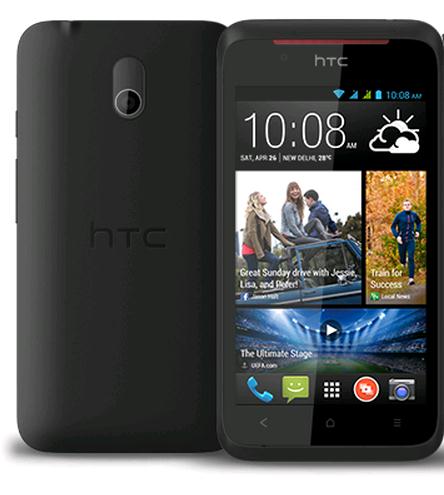
HTC has made a strong market base in Kenya by introducing mid-range smartphones to high-end smartphones. On the other hand, Obi Mobiles, a company co-founded by John Sculley, ex-CEO of Apple and Pepsi Co set its foot in the Kenyan market in March this year. In spite of being new Obi Mobiles stands a good chance to give HTC a tough competition. To be specific, in this review we are comparing HTC Desire 210 with Obi Wolverine S501 to see what they have to offer in the price tag, say around, KSh 9,000.
Look & Feel:
The biggest difference that we note in the first look is the style and the design. While HTC Desire 210 comes with dimension 125.7X65X10.5mm and weighs 130g, Obi Wolverine S510 has relatively bigger body with dimensions 144X73X9.6mm and weighs 167g. On the whole, HTC 210 is smaller, lighter but also relatively thicker looking device than Obi’s Wolverine. Desire 210 has a metallic body with color variants like black, white and red, on the other hand, Obi Wolverine comes with elegant white and striking black, leather-like cover thus protecting your device from cracks and scratches and adds value to your personality.

Display:
The display screen size of Wolverine S510 is 5.0 inch, offering significantly larger visuals than Desire 210 which has a 4.0 inch screen. Even though the screen type of both the devices comprises of TFT technology with capacitive touch screen, Obi Wolverine has an edge over HTC as it has TFT IPS which provides better color reproduction and greater viewing angle. Furthermore, Obi Wolverine takes a slight lead on the screen resolution with 480X854 pixels providing better display clarity in comparison to HTC’s 480X800 pixels screen resolution. On the whole, Wolverine has a definite leg up over Desire on the display front.

OS and Processor:
HTC Desire 210 runs on Android 4.2.2 Jellybean paired with MediaTek MT6572M 1GHz dual-core processor, whereas Obi Wolverine runs on relatively more advanced Android Kitkat 4.4 operating system packed with MediaTek MT6572M 1.2GHz dual-core processor that gives an accelerated performance. On the performance front too, Obi’s Wolverine acquires an edge over HTC’s Desire 210.

RAM and Storage:
RAM and internal storage is a matter of concern if you are looking forward to many apps and games. Both the devices are configured with 4GB of internal memory, which is expandable upto 32 GB externally. However, Obi Wolverine might impress you more with its 1 GB of RAM in comparison to HTC Desire 210 which comes with 512 MB RAM, about half of the former device. Double the RAM means Obi’s Wolverine will ensure faster performance and run applications relatively more smoothly.

Camera and Battery:
HTC Desire 210 has been designed with 5MP primary camera and a VGA secondary camera which over time has gone out of fashion. On the other hand, Obi’s Wolverine comes with a 5MP primary camera with a LED flash ad is placed in the middle of the device and a 0.3MP secondary camera for selfies. Both the devices are equipped with geo-tagging feature, however, Wolverine additionally comes with features like face detection and Panorama Shot. On the whole, Obi once again has a slight leg up over HTC. On the battery front, both HTC Desire210 and Obi Wolverine S501 have removable batteries with 1300mAh and 1500mAh battery limit respectively. However, Desire 210 offers talktime upto 9 hrs and standby time upto 260 hrs whereas Obi Wolverine gives you talktime upto 6 hrs and standby time upto 180 hrs. While Wolverine has a larger battery capacity, the claim of talk and standby time puts HTC Desire ahead of Wolverine.


Connectivity and other Features:
Both HTC Desire 210 and Obi Wolverine S501 are dual-sim phones, and both the SIM supports 3G in both the devices. Both the smartphones have WiFi, GPS, Bluetooth, FM, 3.5mm audio jack, accelerometer and proximity sensor in common.

Conclusion:
We note that while both the devices are comparable on several accounts, there are some differences too. Obi’s Wolverine has a relatively more advanced OS and processor, secondary camera, larger display and double the RAM, whereas HTC Desire claims longer talk and standby time. The price in the Kenya market also works in favour of Obi Wolverine which is around KSh9000 in comparison to HTC Desire 210 marked around KSh10,000.

However, with a certain brand value, HTC Desire 210 may appeal to those looking for a more handy, smaller looking device, and are not constrained by funds. Where as Obi Wolverine would appeal to those keen on better visual experience while watching videos and playing games, better quality selfies and some style statement. On the whole, we note that other than specific brand priority and design preference, Obi’s Wolverine is a better investment considering the specifications and the price tag.


Features / Specifications HTC Desire 210 Obi Wolverine S501
Dimensions (mm) 125.7 x 65.00 x 10.5 mm 144.00 x 73.00 x 9.60mm
Battery capacity (mAh) 1300 1500
Battery Talk Time(hrs) Upto 9 hrs Upto 6 hrs
Battery Standby Time(hrs) Upto 260 hrs Upto 180 hrs
Colours Black, White, Red White, Black
Screen size (inches) 4 5
Resolution 480x800 pixels 480x854 pixels
Processor 1GHz  dual-core 1.2GHz   dual-core
RAM 512MB 1GB
Rear camera 5-megapixel 5-megapixel, Autofocus
Flash No Yes
Front camera VGA 0.3-megapixel
Operating System Android 4.2 Android 4.4.2
Price Around KSh 9,999 Around KSh 9,000

Tuesday, 23 June 2015

Lenovo RocStar A319 vs Huawei Y330: Will front camera make a difference?

By introducing the Android operating system (OS), Google changed the smartphone game for good. It does not take huge amounts in order to buy a smartphone anymore. This warrants that look at select budget smartphones competing in the Kenyan smartphone market to help customers make more informed choices. Therefore, in this review, we are comparing two budget smartphones Lenovo RocStar A319 and Huawei Y330 to see what they have to offer.

Design & Display 
We start with the design of the two smartphone models. While Huawei is available in black, white, red, blue and yellow colour, Lenovo’s RocStar comes in red, white and black variants. Furthermore, although the dimensions are quiet similar, Lenovo’s RocStar gives a slightly sleeker feel with 123.5x63.8x10.2mm dimensions. On the other hand, Huawei with 122.1x63.5x11.3 dimensions is relatively smaller and thicker. Both the devices have a comparable display screen size of 4 inch, resolution (800x480) WVGA, and a multi-touch LCD capacitive touch screen. 


OS & Processor 
Both the devices are powered by MediaTek MT6572 1.3 GHz dual core processor. However, RocStar’s OS Android 4.4 KitKat is an upgraded version over Huawei’s OS Android 4.2 Jellybean. Though Huawei has tweaked the OS and made their own skin Huawei Emotion UI 2.0 Lite which gives display a distinctive look but still it just can’t match up to the performance of an upgraded Android OS.

RAM & Storage 
Both Lenovo’s RocStar and Huawei’s Y330 has a 512 MB RAM. If one is looking forward to have many Apps, lesser RAM may be a limiting factor as it helps apps run smoother with reduced time lags. In addition, both the devices have internal storage space of 4GB that can be expanded up to 32GB using a MicroSD card.


Battery & Camera
Both the devices have same battery capacity. With 1500 mAh battery size both the devices give around 3 hours of talk time and 180 hours of standby time. However, the major difference lies in the cameras. RocStar has a 5 megapixel rear (primary) camera with flash and a 2 megapixel front (secondary) camera with a fixed focus. Huawei, on the other hand, with a 3MP rear camera without flash and no front camera looses out to RocStar on the camera front.

Connectivity 
As far as connectivity is concerned both the devices have a Wi-Fi with 802.11 b/g/n standards supported, Bluetooth, GPS, 3.5 mm audio jack and FM receiver.


Price in Kenya
Considering that most of the specifications are comparable, the price difference between the two devices is rather small. In Kenya, while Huawei Y330 is priced at around KSh 6500, Lenovo’s RocStar A319 is at around KSh 7500. Slightly higher price in case of RocStar seems justified on account of three major advantages over Huawei Y330, which include a more advanced version of OS, a superior front camera and a rear camera, which Huawei does not provide.


Concluding Remark 
The two models are pretty much comparable on most of the indicators. On the whole, Huawei Y330 offers relatively more colour options to choose from, whereas Lenovo’s RocStar A319 provides a definite camera advantage. Not having a front camera these days means loosing out on the all time selfie-advantage, which has become a necessity these days, particularly among the youth.