Walking along the streets of Kenya’s capital Nairobi, it is hard to miss large signboards of two competing smartphone companies, a relatively established player, Wiko Mobiles, and a more recent player, Obi Mobiles, a company co-founded by John Sculley, ex-CEO of Pepsi Co and Apple. Both the brands are offering youth oriented high performance smartphones with attractive designs and affordable prices. However, the top down advertising without access to a detailed analysis of the products can be misleading sometimes. Therefore, we have picked up Wiko’s Getaway and Obi’s Hornbill S551 for our weekend analysis to help Kenyan youth determine which one turns out to be a smarter buy. At the very outset, we admit that both the smartphone makers have done a commendable job with the design, keeping their devices sleek and colourful.
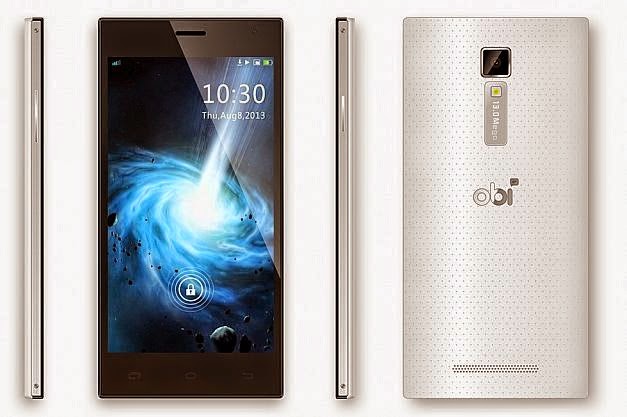
If we note the overall dimensions, Wiko’s Getaway is 143x69.5x7.2mm and weighs 133g, whereas Obi’s Hornbill comes with 156x76.8x7.9mm and is slightly heavier at 145g. As such, size should not necessarily be a disadvantage, but the overall dimensions reflect in the size of the display screens of the two devices, which is 5 inches in case of Getaway and 5.5 inches in Hornbill, giving Hornbill an edge. The two devices have a capacitive touch screen with a resolution of 720x1280 pixels HD display. The display type for both devices is IPS, a system that improves vision angle and rich colors. While the overall size could be a matter of preference, a larger display screen enhances the overall quality of viewing experience.
At the performance front, Obi’s Hornbill is powered by an advanced MTK, MT6582, Quad Core 1.3GHz Processor that runs on Android 4.4.2 KitKat operating system, where as that of Wiko’s Getaway is powered by Quad Core 1.3 GHz Cortex-A7 Processor that runs on Android 4.4 (Kitkat). Both the devices have 1GB RAM, but the internal storage varies with 16GB for Getaway and 8GB of Hornbill, however, both are expandable up-to 32GB via MicroSD card. Here Wiko has an edge but there is a catch. There is no separate MicroSD card slot in Getaway. Wiko has provided dual SIM card slot in their device out of which one is Micro and other is Nano, which can also be used as Micro SD card. This means you can use a SD card only at the expense of your Nano SIM card; essentially meaning that if you have a MicroSD card inserted then it is no longer a dual SIM device. Obi’s Hornbill, on the other hand, also has a dual SIM card slot with 3G support for each.

At the performance front, Obi’s Hornbill is powered by an advanced MTK, MT6582, Quad Core 1.3GHz Processor that runs on Android 4.4.2 KitKat operating system, where as that of Wiko’s Getaway is powered by Quad Core 1.3 GHz Cortex-A7 Processor that runs on Android 4.4 (Kitkat). Both the devices have 1GB RAM, but the internal storage varies with 16GB for Getaway and 8GB of Hornbill, however, both are expandable up-to 32GB via MicroSD card. Here Wiko has an edge but there is a catch. There is no separate MicroSD card slot in Getaway. Wiko has provided dual SIM card slot in their device out of which one is Micro and other is Nano, which can also be used as Micro SD card. This means you can use a SD card only at the expense of your Nano SIM card; essentially meaning that if you have a MicroSD card inserted then it is no longer a dual SIM device. Obi’s Hornbill, on the other hand, also has a dual SIM card slot with 3G support for each.
Battery life is one of the most important aspects of any smartphone. Wiko’s Getaway has a 2000mAh Li-Po battery, where as Obi’s Hornbill is slightly ahead with 2200mAh Li-ion removable battery. The difference is rather small but still could become a factor in taking a decision. Furthermore, both the devices are equipped with 13MP rear and 5MP front cameras. However, Wiko’s Getaway gets ahead in terms of colour choices it offers, which include Black and Gold, White and Silver, Navy and Coral, where as Obi’s Hornbill is available in black and White variants only. That finally brings us to the price tag in the Kenyan market, where Obi’s Hornbill has a little advantage as it is available at around KSh 18,000 where as Wiko Getaway is priced at around KSh 20,000.
With almost comparable features, Obi’s Hornbill could claim a slight overall edge on account of a bigger display screen, slightly larger battery and relatively lower cost. However, with 16GB internal storage space, and ignoring the SD card slot glitch, Wiko’s Getaway can be an equally good buy, particularly if one is looking for a smaller device.


 Posts

