Showing posts with label Obi Mobiles Hornbill S551. Show all posts

Tuesday, 21 July 2015

Obi Hornbill Beats Samsung Galaxy S3 with Specifications

Obi Mobiles, a smartphone company establish by John Sculley, previous CEO of Pepsi Co and Apple, has entered East Africa, beginning Kenya and Tanzania after tasting success in East Asia. On the other hand, it is as of now confronting rivalry from set up brands, for example, Samsung, Tecno Mobiles, Huawei, HTC, and so forth. With yet another player guaranteeing the predominance of its cell phone in the business sector adds to the test of picking the right item. Through this comparison, we have analyzed the relative qualities of Samsung Galaxy S3 and Obi Hornbill S551 with the aim to empower buyers to settle on an educated decision.


Obi’s Hornbill in display screen size, operating system technology, cameras and battery life including more advanced processor and the ability to function on multiple networks (2.5G, 3G and 4G), leaves Samsung’s Galaxy S3 behind. Looking at the price tag, Samsung’s Galaxy S3 is priced around KSh 40,000, where as Obi Hornbill is pleasantly priced around KSh 18,000. Obviously, Samsung has the brand quality to legitimize the cost, however a smart buyer would beyond any doubt consider a few discriminating features while settling on choice.


Wednesday, 6 May 2015

Will brand-value help Samsung Galaxy S3 to battle it out with Obi’s Hornbill S551?


Having tasted some success in a rather short time in the Middle East, Obi Mobiles, a smartphone company co-founded by John Sculley, former CEO of Pepsi Co and Apple, has entered East Africa, starting Kenya and Tanzania. However, it is already facing competition from established brands such as Samsung, Tecno Mobiles, Huawei, HTC, etc. With yet another player claiming the superiority of its smartphone in the market adds to the challenge of picking the right product. Through this comparative review, we have tried to examine the relative strengths of two smartphone models, i.e. Samsung Galaxy S3 and Obi Hornbill S551 with the intention to enable consumers to make an informed choice.


http://www.samsung.com/global/galaxys3/
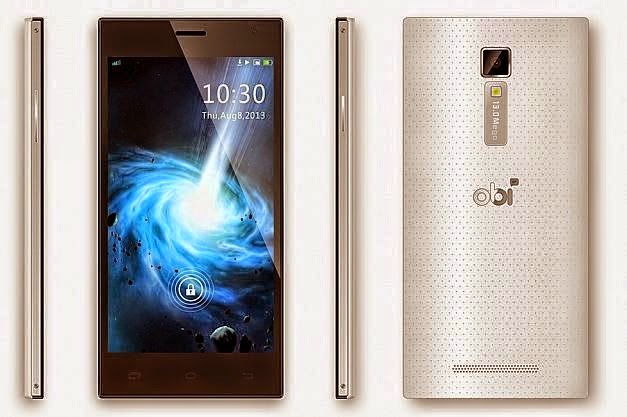
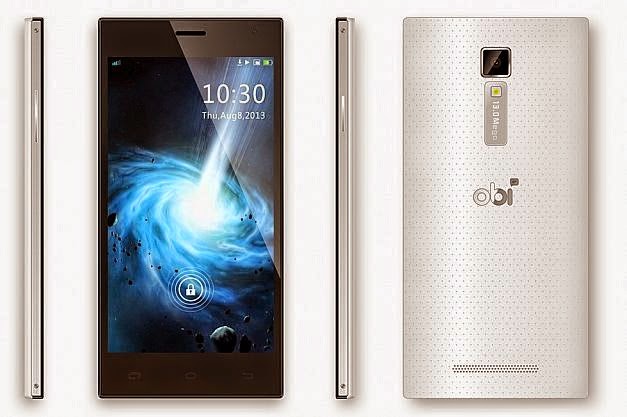
With dimensions 136.6x70.6x8.6mm, Samsung’s Galaxy S3 weighs about 133g where as Obi’s Hornbill with 156x76.8x7.9mm dimensions weighs only about 126g. Interestingly, in spite of its larger frame, Obi’s Hornbill is a relatively lighter device. Furthermore, while Galaxy S3 has a Super AMOLED display, Hornbill has a TFT IPS Screen with Capacitative Touch HD. Both the devices, however, have a resolution of 1280x720 Pixels. Given the larger overall dimensions, Obi’s Hornbill has the space to offer a wider display screen size 5.5 inches, where as Galaxy S3 comes with a screen size is 4.8 inches. Considering the display screen Galaxy S3 has an edge due to being more battery efficient, better viewing quality at angles and just sharper and clearer images in general, however, a larger screen size in Hornbill simply enhances the viewing experience. 


http://me.obimobiles.com/mobile/s551-hornbill

At the performance front, both Galaxy S3 and Hornbill have the same 1GB RAM, but Galaxy S3 has a comparatively advanced Quad Core 1.4GHz processor than Hornbill that comes with Quad Core 1.3GHz processor, which gives S3 a sure edge. However, Hornbill makes up for the processor lag in the operating system. Obi’s Hornbill runs on Android 4.4 Kit Kat while Samsung’s Galaxy S3 runs on a rather outdated Android 4.0 Ice Cream Sandwich, which puts Obi’s Hornbill on a stronger footing. Furthermore, Galaxy S3 has an internal memory of 16GB expandable up to 64GB through microSD where as Obi’s Hornbill has an 8GB internal memory which is expandable up to 32GB through microSD. Since expandable memory of 32 GB is more than sufficient, we believe it is not really a critical differentiator.

Obi’s Hornbill also has superior cameras of 13 megapixel at the rear and 5 megapixel at the front, where Samsung’s Galaxy S3 has an 8 megapixel rear camera and a meager 1.9 megapixel front camera, an out right advantage Hornbill. Looking at the battery capacity, Galaxy S3 with 2100 mAh once again is found to be lacking before Obi’s Hornbill that comes with 2200 mAh. Maybe Samsung should have paid more attention to the battery and less on the expandable memory.

In terms of Networks and Wireless Connectivity, Samsung’s Galaxy S3 is available on 2.5G: 850/900/1800/1900 MHz, 3G: 850/900/1900/2100 MHz and 4G (dependent on market) but Hornbill is available only on 3G: 850/900/1800/1900 MHz, WCDMA 900/2100MHz. Both devices have v4.0 Bluetooth and Wi-Fi capabilities (802.11 a/b/g/n), but only Galaxy S3 provides Wi-Fi Hotspot. Another differentiator is the SIM Card capability, where Galaxy S3 has only 1 slot for a micro SIM but Hornbill has two slots and can be used for micro SIMs and regular SIMs.

That brings us to the most critical differentiator, the price. In spite of lagging behind Obi’s Hornbill in display screen size, operating system technology, cameras and battery life but with the advantages of more advanced processor and the ability to function on multiple networks (2.5G, 3G and 4G), Samsung’s Galaxy S3 is priced around KSh 40,000, where as Obi’s Hornbill is pleasantly priced around KSh 18,000. Of course, Samsung has the brand value to justify the price, but a smart consumer would sure consider several critical differentiators while making decision.  

Sunday, 3 May 2015

Wiko’s Getaway may have hard time beating Obi’s Hornbill in Kenya

Walking along the streets of Kenya’s capital Nairobi, it is hard to miss large signboards of two competing smartphone companies, a relatively established player, Wiko Mobiles, and a more recent player, Obi Mobiles, a company co-founded by John Sculley, ex-CEO of Pepsi Co and Apple. Both the brands are offering youth oriented high performance smartphones with attractive designs and affordable prices. However, the top down advertising without access to a detailed analysis of the products can be misleading sometimes. Therefore, we have picked up Wiko’s Getaway and Obi’s Hornbill S551 for our weekend analysis to help Kenyan youth determine which one turns out to be a smarter buy. At the very outset, we admit that both the smartphone makers have done a commendable job with the design, keeping their devices sleek and colourful.

http://me.obimobiles.com/mobile/s551-hornbill
If we note the overall dimensions, Wiko’s Getaway is 143x69.5x7.2mm and weighs 133g, whereas Obi’s Hornbill comes with 156x76.8x7.9mm and is slightly heavier at 145g. As such, size should not necessarily be a disadvantage, but the overall dimensions reflect in the size of the display screens of the two devices, which is 5 inches in case of Getaway and 5.5 inches in Hornbill, giving Hornbill an edge. The two devices have a capacitive touch screen with a resolution of 720x1280 pixels HD display. The display type for both devices is IPS, a system that improves vision angle and rich colors. While the overall size could be a matter of preference, a larger display screen enhances the overall quality of viewing experience.

At the performance front, Obi’s Hornbill is powered by an advanced MTK, MT6582, Quad Core 1.3GHz Processor that runs on Android 4.4.2 KitKat operating system, where as that of Wiko’s Getaway is powered by Quad Core 1.3 GHz Cortex-A7 Processor that runs on Android 4.4 (Kitkat). Both the devices have 1GB RAM, but the internal storage varies with 16GB for Getaway and 8GB of Hornbill, however, both are expandable up-to 32GB via MicroSD card. Here Wiko has an edge but there is a catch. There is no separate MicroSD card slot in Getaway. Wiko has provided dual SIM card slot in their device out of which one is Micro and other is Nano, which can also be used as Micro SD card. This means you can use a SD card only at the expense of your Nano SIM card; essentially meaning that if you have a MicroSD card inserted then it is no longer a dual SIM device. Obi’s Hornbill, on the other hand, also has a dual SIM card slot with 3G support for each.
http://world.wikomobile.com/c-2004-0-341-Protective-films-GETAWAY
Battery life is one of the most important aspects of any smartphone. Wiko’s Getaway has a 2000mAh Li-Po battery, where as Obi’s Hornbill is slightly ahead with 2200mAh Li-ion removable battery. The difference is rather small but still could become a factor in taking a decision. Furthermore, both the devices are equipped with 13MP rear and 5MP front cameras. However, Wiko’s Getaway gets ahead in terms of colour choices it offers, which include Black and Gold, White and Silver, Navy and Coral, where as Obi’s Hornbill is available in black and White variants only. That finally brings us to the price tag in the Kenyan market, where Obi’s Hornbill has a little advantage as it is available at around KSh 18,000 where as Wiko Getaway is priced at around KSh 20,000.

With almost comparable features, Obi’s Hornbill could claim a slight overall edge on account of a bigger display screen, slightly larger battery and relatively lower cost. However, with 16GB internal storage space, and ignoring the SD card slot glitch, Wiko’s Getaway can be an equally good buy, particularly if one is looking for a smaller device. 

Tuesday, 28 April 2015

Huawei’s Ascend could face a challenge from Obi’s Hornbill in Kenya

Huawei, the Chinese telecommunications equipment company, has been an established player in Kenya’s smartphone market. A relatively new player, Obi Mobiles, co-founded by John Sculley, ex-CEO of Pepsi Co and Apple, has recently launched its range of eight smartphone models in the Kenyan market. The ensuing competition could spell some good news for the Kenyan smartphone consumers. For this review, we have picked up two comparable models from the two leading players, which include Huawei’s Ascend P6 and Obi Mobiles’ Hornbill S551. The intention is to juxtapose the facts to help consumers make an informed choice.


Let us first get the similarities straight. Obi’s Hornbill S551 is dual-SIM (GSM+GSM) smartphone with 3G support for each and runs on Android 4.4.2 KitKat platforms, where as Huawei’s Ascend P6 was launched with Android 4.2.2 Jelly Bean, with the possibility to upgrade the same to 4.4.2 Kitkat. The first major difference, however, is in the screen size, where Obi’s Hornbill with 5.5inch (720x1280 pixels) size has an edge over 4.7inch (720x1280 pixels) of Huawei’s Ascend P6. This implies that Hornbill users would be able to watch stream videos or movies on a relatively larger screen.

Furthermore, Obi’s Hornbill is powered by a 1.3GHz quad-core MediaTek MT6582 processor supported with 1GB of RAM and with 8GB of inbuilt storage, which is further expandable via a micro SD card up to 32GB. On the other hand, Huawei’s Ascend P6 runs on a 1.5GHz quad-core Cortex-A9 processor aided by a 2GB RAM, but has the same inbuilt and expandable storage capacity as that of Hornbill. While Ascend has the advantage of extra 1GB RAM, Hornbill comes with a more latest version processor, which reflects in the choice of cameras. While both have a 5 megapixel front camera, the difference is in the secondary camera, which is 13 megapixels in the case of Hornbill and only 8 megapixels in Ascend P6, which gives Hornbill a slight advantage. 

http://me.obimobiles.com/mobile/s551-hornbill

Most of all the battery life is a significant criterion for any smartphone user. At this front too, Ascend P6 with its battery capacity of 2000 mAh slightly lags behind Hornbill whose battery capacity is 2200 mAh. Both the devices share the same Wi-Fi capabilities (802.11b/g/n), however, Hornbill has a v4.0 Bluetooth where as Ascend has a v3.0 Bluetooth. From the connectivity point of view, Obi’s Hornbill offers 3G, GPS and Micro-USB, where as Ascend comes with both 2G GSM: 900/1800 MHz and 3G, WCDMA 850/900/1700/1900/2100 MHz, which gives Ascend P6 an advantage.

The idea of overlooking brand value is increasingly becoming common as smart-customers evaluate smartphones based on what all they have to offer for the price tag they come with. At the price front, both the devices make for a good pocket friendly choice, but Obi’s Hornbill priced at around KSh18,000 has some advantage over Huawei’s Ascend P6, which is priced around KSh23,000. On the whole, Obi’s Hornbill acquires an edge on account of larger screen size, battery capacity, secondary camera and price, where as Huawei’s Ascend P6 may come handy due to the option of 2G connectivity in some parts.