Showing posts with label Obi Mobiles. Show all posts

Monday, 31 August 2015

Obi Worldphone SF1 steps into world's leading smartphone markets

Silicon Valley is the meeting place of world's most innovative technology and breath taking art. From the heart of the valley, Obi announces it’s unique range of smartphones under the master brand Obi Worldphone. Considering that the global legends like John Sculley and Robert Bruner of Apple fame have come together to envision, design, build and launch this range, we most certainly have to check Obi's flagship, the Obi Worldphone SF1, where SF stands for San Francisco and number 1 represents the first in series. This flagship device of Obi Worldphone had its global launch in San Francisco followed by regional releases in East Asia (Vietnam, Thailand), Middle East (Dubai, Saudi Arabia) and lately in India as well.   
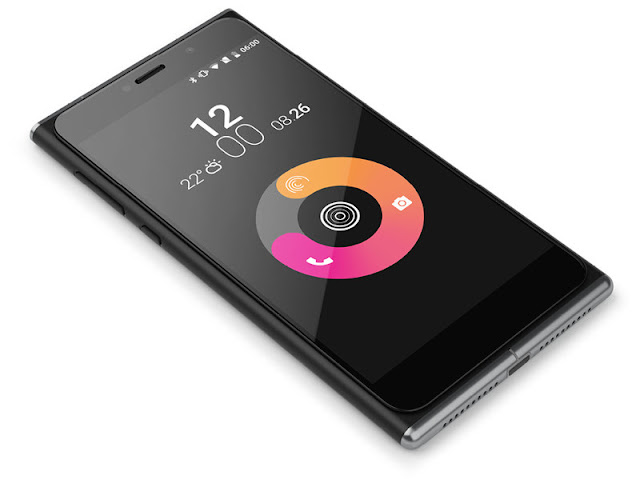
Obi Worldphone SF1
In today’s hyper competitive smartphone market, the company claims that its mission is to bring beautifully designed, technologically superior smartphones, priced at an exceptional customer value. If this sounds like what you need, let's find out what this device really brings.

A design to stand out from the rest

With our phone becoming part of what we wear and carry, we also want it to reflect our unique style, choice and comfort. Even then, how easy is to discover and mould an original, unique design in a small utility device like smartphone? Well, Obi seems to have raised the bar here. A custom User Interface (UI) with original and authentic silhouettes as expected of Ammunition Group, where every detail and curve is carefully crafted to make the piece a class apart and instantly recognizable as Obi Worldphone.


Particularly, SF1 comes in the timeless classic black hue, with metallic accents and a unibody compose, with “Designed in San Fransisco” stamped right behind. The fiberglass-reinforced body has accents made of an alloy of Titanium and Aluminium. The High Young's module makes it less prone to bending. The premium of having an oleophobic, anti fingerprint and UV coating saves our time on keeping it new, clean and scratch free. It has an elevated floating screen experience, emphasizing on a more engaged interaction with what we see and do with our smartphone.

However, if you happen to be a smart, busy and, somewhat, clumsy person like me, your eyes would go looking for strength and durability. Thankfully, SF1 is built with Corning Gorilla Glass (GG4), the toughest in category to protect the display (It is important to note here that even iPhone6 has CGG3). The raised screen is placed with a special gasket for protection. The architecture is such that the metal end plates at the top and bottom are more likely to hit the ground before the glass and they have been designed to take the impact, so that we are ready to take knocks better, and explore life in style!

Read More: iPhone6 vs Obi Worldphone SF; It's specifications vs brand

SF1 comes with a rich and sharp display

With an eye for detail and expression, the smartphone screen gives a good 5 inch display, as is common and demanded in smartphones now a days. The dimensions are 146*74*8.1mm, giving it a sturdy look. The screen is equipped with High Definition (HD) 1080 X 1920 pixels, which means richer colour and sharper details with 443ppi in cell Display. To make you feel right in the middle of your movie experience, the device has Dolby 5.1 discreet channels of high fidelity surround sound. Having a secondary microphone helps in noise cancellation, so that you can communicate neat and be heard clear-cut no matter where you are.

A phone that runs on eight engines

Coming to the roots of the device, Obi’s SF1 processes on Qualcomm MSM8939 64 - bit Snapdragon 615 with 1.5 GHz Octa-core clock speed. This is a good speed, but there is more to it, especially considering that not only your smartphone should perform matching your pace but also save on power where you are taking it easy. Although the Snapdragon 615 is octa-core, it is not just eight cores. It is actually four fast (1.7GHz) plus four not-so-fast (1GHz) cores. As a result, the system shifts to the slower, less power-hungry, cores when there is no load, and back again smoothly when there is. The benefit is both performance and power saving. This is not yet common in smartphones, therefore, Obi’s SF1 sure comes with an advantage. The Adreno 405 GPU 64 bit in turn provides first class HD gaming experience due to its support for both 2D and 3D games, giving you both compatibility and performance. The phone operates on Google's, Android 5.02 (lollipop) software, hence all Google Play store supported applications run on Obi Worldphone.

SF1 comes loaded with softwares and storage choices

Beside Obi custom user interface, other softwares include Swiftkey, Accuweather, Clean Master, MS Office, AVG Anti virus and a lot more to come! To support all these there is a well planned option for either 16GB internal storage with 2GB RAM or 32 GB internal storage with 3GB RAM. Along with this it has a micro SD slot for an expandable memory upto 64 GB, hence we are never short of space. The DDR3 RAM and eMMC 4.5 ROM is the fastest possible option for the given processor, plus 15GB cloud storage on Google. The quick charge feature in 3000 mAh battery power supports phone life for 20 days standby time, upto 28 hours talk-time, 10 hours video playback time and a delightful 100 hours of music playback.

A camera that is supported with authentic hardware

Most importantly, with 13 Mega Pixels rear camera, 5 Mega Pixels front camera with LED flash on both sides powered by Sony Exmor IMX214 Sensor, SF1 is actually a professional camera in the palm of your hand. Not only it ensures superb lowlight photos, but in high density resolution too. The f/2.0 Aperture allows a good amount of light to fall on the lens to capture a sharper image. One can capture a scene with everything in focus or refocus the image taken as it is never too late, zoom to read text, click photos in low light as layered flash will not ruin the photo's brightness, texture, color or take split second perfect focus even in the sun. Capturing RAW images always allows higher quality photo, as it does not compress the photo like in JPG, BMP etc. formats. Touch focus, face/smile detection, panorama HDR. Video 1080p@30fps, Ubifocus, Chrome flash and optical zoom assist us to capture timeless memories and selfies, perfectly forever.

SF1 covers most of the networks

The network reach and communication features GSM (850/900/1800/1900 MHz) /WCDMA (850/900/1800/1900 Mhz)/HSPA+ /4G LTE (FOD B3 1800 MHz and TDD B40 2300 MHz). The device supports Dual SIM (Micro and Nano, WLAN direct Wi-Fi 802.11 a/b/g/n, Dual band. Blutooth (v4.0 A2DP) and GPS with GLONASS. GLONASS is known to provide faster and accurate fixes, especially in EMEA, Asia and North America. The phone comes with a custom designed charger and a micro USB data cable (v2.0) to connect further. The brand upholds a standard one-year warranty in most markets. The phones are built by CK Telecom Limited, a leading mobile phone ODM/OEM provider in Heyuan, China.

Obi Worldphone SF1 takes smartphone experience to next level

Ammunition has designed Obi Worldphone from concept to completion. SF1’s industrial design, user interface (UI), superior features and packaging, everything is aimed at user experience, as if this stylish device is built to bring out the connection between the smartphone and its owner. With this combination of beauty and power, Obi aims to serve customers around the world. However, the most interesting aspect is the price tag (App. USD200-250), which actually makes one think as if the company is tactically underrating the device, as if this beauty deserved to cost more. Moreover, Obi promises to push the limits of smartphone experience by working to bring in more softwares and plans to sell its own line of accessories soon.

Well, SF1 most certainly brings some fresh air of Silicon Valley in the global smartphone market in terms of class, originality, display, camera, sound and battery life at an exceptional price. With its mission to fuel the dreams of those young and upbeat, we see every reason that the device would be able to attract attention across the markets. On the whole, to the great customer delight, Obi Worldphone SF1 seems to have raised the overall quality bar for the price point it comes in.


Thursday, 30 July 2015

Obi's Alligator is Leaving A Mark in Africa

Obi Mobiles, co-founded by John Sculley, had launched its first range of smartphones on the name of animals in India 2014. Over couple of months, Obi moved to Middle East and then subsequently entered Africa, where several of Obi devices have succeeded in making their presence felt. In this brief review, we have particularly taken a gander at the Obi model called Alligator S454.


The gadget captures the mood with its good camera quality. The devices is a complete blend of hardware and software that gives it a slight edge at the value that it comes. On the off chance that you have quite recently begun to wander into the cell phone classification of telephone moving out from your feature phones, Obi Alligator S454 may very well awe you. Pull out all the stops on the off chance that you are searching for all the more in less.

Tuesday, 21 July 2015

Obi Hornbill Beats Samsung Galaxy S3 with Specifications

Obi Mobiles, a smartphone company establish by John Sculley, previous CEO of Pepsi Co and Apple, has entered East Africa, beginning Kenya and Tanzania after tasting success in East Asia. On the other hand, it is as of now confronting rivalry from set up brands, for example, Samsung, Tecno Mobiles, Huawei, HTC, and so forth. With yet another player guaranteeing the predominance of its cell phone in the business sector adds to the test of picking the right item. Through this comparison, we have analyzed the relative qualities of Samsung Galaxy S3 and Obi Hornbill S551 with the aim to empower buyers to settle on an educated decision.


Obi’s Hornbill in display screen size, operating system technology, cameras and battery life including more advanced processor and the ability to function on multiple networks (2.5G, 3G and 4G), leaves Samsung’s Galaxy S3 behind. Looking at the price tag, Samsung’s Galaxy S3 is priced around KSh 40,000, where as Obi Hornbill is pleasantly priced around KSh 18,000. Obviously, Samsung has the brand quality to legitimize the cost, however a smart buyer would beyond any doubt consider a few discriminating features while settling on choice.


Monday, 22 June 2015

Obi Wolverine is a better deal than Samsung S Duos 2 in Kenya

This comparative review focuses on two mid-range smartphones that are competing against each other in East Africa, particularly Kenya. Samsung S Duos 2 has been a choice of many for a long time in Kenya, where as Wolverine S501 from Obi Mobiles, a company co-founded by John Sculley, ex-CEO of Apple and PepsiCo, has entered the Kenyan market in March this year. In spite of being new Obi Mobiles, as the review indicates, stands a good chance to give a healthy competition. So, as part of our comparative review series, in this review we compare Samsung S Duos 2 with Obi’s Wolverine S501.
Design: In the first look, we note that Samsung S Duos 2 (Size: 121.5X63.1X10.57mm) is comparatively much smaller looking device than Obi’s Wolverine (Size: 144X73X9.6mm) and weighs much lighter too, just 118g as compared to Obi’s 167g. With such dimensions, Samsung Duos fits well in the hand and easy to carry around, however, larger size is not necessarily a disadvantage, probably more of a matter of preference. Moreover, Duos 2 has a metallic body finish and comes in white and black colours, where as Wolverine comes in impressive black, leather-like cover that protects the device from cracks and scratches.

Display: The overall size seems to reflect in the display screen size, which is 4 inch in case of Samsung S Duos 2, where as Wolverine offers with a screen size of 5 inch; a significant one inch difference obviously means larger visuals. Moreover, while Duos comes with a display with TFT technology and a screen resolution of 420X800 pixels, Wolverine S501 has a TFT IPS Screen with capacitive touch with a screen resolution of 480X854 pixels. Given its larger screen size, superior display technology and slightly higher resolution, Obi’s Wolverine takes a slight lead on the visual experience front.


OS & Processor: Samsung Duos 2 runs on Android v4.2.2 Jelly Bean packed with a 1.2 GHz Cortex-A9 processor, where as Wolverine S501 runs on Android KitKat (4.4), powered by a MeditaTek MTK6572 1.2 Ghz dual-core processor, that gives it an accelerated touch screen and superior performance. On the OS front too, Wolverine has a leg up over Samsung Duos.

RAM & Storage: Samsung S Duos 2 comes with a mere 0.75GB of RAM and 8GB of internal storage that luckily Samsung gives you an option of expanding up to 64GB, however, a low RAM and extra storage option can make the performance of the device suffer. Obi Wolverine S501, on the other hand, has a more balanced 1GB RAM support and 4 GB internal storage with external memory support up to 32GB via a MicroSD card.

Camera & Battery:  Samsung S Duos 2 sports a 5MP primary camera with flash. It also has a VGA secondary camera which with time has run out of fashion. Obi Wolverine S501 sports a 5MP primary camera placed in the middle of the device and comes with a LED flash. It also has a 0.3MP secondary camera. On the battery front, both Samsung S Duos and Obi Wolverine S 501 have removable batteries with 1500 mAh capacity that gives you a standby time of 280hrs in Duos and 180hrs in Wolverine. While Obi Wolverine takes a lead on the camera front, Samsung S Duos 2 claims better standby time.

Connectivity: On the connectivity front, both Samsung S Duos 2 and Obi Wolverine S501 are dual-sim phones, Wolverine being the smart one for it has 3G support for both the sim-cards, where as Duos 2 uses one as 2G and the other as 3G. Both the smartphones have WiFi 802.11/b/g/n and Bluetooth v4.0 support.

Conclusion: Both the devices are pretty much comparable on most of the indicators, however, there are specific differences. Samsung S Duos 2, with a certain brand value, would appeal to those looking for an elegant, easy to carry, smaller looking device, where as Obi’s Wolverine would appeal to those looking for a device that could afford better visual experience, especially youngsters who like to watch videos on the smartphone. The leatherish feel in the Wolverine design is unique too. In addition, Obi’s Wolverine has the advantage of superior OS, higher RAM and superior secondary camera.

Price: Finally, we look at the price in the Kenya market, where Samsung S Duos 2 is marked around 11,500KSh, where as Obi’s Wolverine S501 is at around 9000KSh. Therefore, unless there is specific brand priority and design preference, we find Obi Wolverine to be a better overall deal considering the specifications and the price point at which it comes.

Thursday, 18 June 2015

Obi Fox is out for a kill in Kenya, Huawei needs to watch out

If you are looking for an entry-level Android handset, the choices are generally limited, and sometimes even the budget market seems pricey. In Africa, Huawei has received notable praise for its affordable but high-performing smartphones. Huawei has added another member to the Y-series of entry level budget smartphones which is Huawei Y330. On the other hand, Obi Mobiles, co-founded by John Sculley, ex-CEO of Pepsi Co and Apple, is already making its mark in Africa since it entered the African market couple of months ago. Therefore, we have picked up Huawei Y330 and ObiFox S453 for our comparative analysis. Let us see how do they fare against each other.
Look & Feel
We start with the design of the two smartphone models. First point of difference is Huawei Y330 comes in black, white, red, blue and yellow colours, Obi’s Fox is only available in white colour, so if you are keen on a colourful device, there are more options with Huawei. However, there are other design considerations too. With 131.7x64x9mm dimensions, Obi Fox gives a more sleeker look than Huawei that is 122.1x63.5x11.3mm and has slightly shorter and thicker appearnce.

Display
The main difference lies in the display screen size which is 4.5 inch in case of Obi Fox and 4 inch in case of Huawei Y330. Furthermore, both the devices have a capacitive touch screen where Obi Fox display screen produces 854x480 pixels resolution where as Huawei Y330 slightly lags behind with 800x480 pixels. A larger screen is always a plus from the point of viewing experience. It particularly acquires more significance for the youth where video viewing and gaming on the smartphone is part of their everyday life.

Processing Capacity
Obi’s Fox is powered by MediaTek MT6572 1 GHz dual core processor, as compared to Huawei Y330 which is powered by similar MediaTek MT6572 1.3 GHz dual core processor, offering a slightly better clock speed. However, Obi Fox’s OS Android 4.4.2 KitKat is an improved  version over Huawei’s  Android 4.2 Jellybean OS. Moreover, Huawei has tweaked with the OS and has their own skin Huawei Emotion UI 2.0 Lite which gives the display a distinctive look. Both the devices have internal storage space of 4GB that can be expanded up to 32GB using a MicroSD card. However, the major difference between the two is RAM where Obi Fox’s 1GB RAM completely outshines Huawei Y330 which comes with 512MB RAM. Extra RAM helps apps run smoother with reduced time lags, and when coupled with a powerful processor, it enhances overall quality of user interface and experience.

Battery & Cameras
Obi’s Fox has a leg up on the battery front too. With 1600 mAh battery size, Fox gives 6 hours of talk time and 180 hours of standby time while, on the other hand, Huawei Y330 has 1500 mAh battery that gives 3 hours of talk time and 240 hours of standby time. Also, Fox S453 has an impressive 5MP primary camera and 2MP Front camera, whereas Huawei Y330 comes with 3MP primary camera and no Front camera. Huawei’s decision to bring a device without a front camera seems to be a big blunder considering the selfie generation. Needless to say that Obi Fox has emerged as a clear winner in this feature.  


Additional Features
Lets sum it up
Concluding Remark
As far as connectivity is concerned, both the devices have 2G, 3G, Wi-Fi with 802.11 b/g/n standards supported. Both the devices also have a dual sim card slots, Bluetooth V4.0, GPS, 3.5 mm audio jack and FM receiver.

We note that Huwaei Y330 offers more colour options, slightly more powerful processor and an operating system with its own skin for a distinctive effect, but also has a major drawback in terms of not having a front camera. On the other hand, Obi Fox S453 takes a clear lead on every other key component which includes a larger display screen with a slightly better resolution, double RAM, more advanced OS, higher battery capacity and, most of all, it comes with a 2MP front camera to respond to the needs of selfie generation. We also explored the price in the Kenyan market, where Obi Fox is priced at around KSh9000 where as Huawei Y330 is at around KSh6500. The price difference is justified on account of front camera.

It is important to note that both the devices are made for people on a limited budget and therefore it is obvious that in order to maintain the low price the manufactures have made some sacrifices. However, we find that Obi has been able to work out the trade offs better and manages to put together a device that balances youthful aspirations, specifications and price better. If one can squeeze out a better price deal, even better.


Friday, 12 June 2015

MotoG (8GB) vs Octopus S520: Which is a smart buy in Kenya?

Remember the times Motorola was a global Mobile maker and that too a leader at it? Well, the times have changed. The smartphone market is now flooded with newbies that are giving competition to the veterans. Bought by Google, Motorola has been trying hard to stay in the competition with mid-level and high-end smartphones, and has done well in the mid range category. One of the newbie in the market, Obi Mobiles, co-founded by Ex-Apple and PepsiCo CEO, John Sculley, ventured into Africa in March this year where as Motorola has a presence since 2013. Therefore, we decided to compare two of the best models from each of the companies, i.e. Octopus S520 of Obi Mobiles and Moto G (8GB variant) of Motorola.

DESIGN AND BUILD: Motorola Moto G comes in the dimensions of 141.5X70.7X6.0mm and weighs 149g where as Obi Octopus comes in the dimensions of 145X75X8.4mm (Obi’s official site doesn’t offer the weight of Octopus). MotoG is round edged and fits easy in hand and comes in multiple colours. You also get customised back shells that are interchangeable if you are looking for more colours. Obi Octopus S520, on the other hand, is a bar shaped, curved at all ends device that comes in a beautiful silver metallic cover.

DISPLAY: Motorola MotoG has a LCD capacitive screen with a 4.5’’ HD display that gives you a screen resolution of 720X1280 pixels. On the other hand, Obi Octopus S520 comes with 5” TFT IPS screen that feels more fluidic, thus gives Octopus an added advantage of better viewing angles over MotoG.

OS & PROCESSOR: Motorola MotoG runs on Android 4.3 Jelly Bean that is upgradable to Kitkat, where as Obi Octopus S520 runs on Android 4.4.2 KitKat, which gives Octopus a leg up. On the processor front, MotoG is packed with Qualcomm’s Snapdragon 400 that clocks speed at 1.2 GHz supported by a quad-core CPU. Obi Octopus S520 is build with a MTk, MT6592 Octa-Core processor clocking speeds at 1.7 GHz. Moto G gets an edge over Octopus in terms of chipset.
RAM & STORAGE: Both, Motorola MotoG and Obi S520 have 1GB of RAM support and 8GB of internal storage that is expandable in Octopus upto 32GB via microSD card slot. MotoG misses on this feature that is important for people who like to store lots of music and pictures on their smartphones. However, the option of expandable memory is available for MotoG (16GB) variant.

CAMERA & BATTERY: It is the cameras where the Motorola MotoG takes the beating from Obi Octopus S520. MotoG sports a 8MP primary camera and a 2MP secondary to cater to your selfie needs where as Octopus S520 sports a 13MP primary camera built by Sony and a 5MP secondary camera for high quality selfies. On the battery front, while Motorola MotoG has battery capacity of 2070mAh that is embedded, Octopus S520 has a touch higher battery capacity of 2100mAh and is also removable.

CONNECTIVITY: On the Connectivity front, both Motorola MotoG and Obi Octopus S520 are 3G-enable devices with a WiFi 802.11 b/g/n, Bluetooth 4.0 and USB support.

  Comparison Chart 
Key Indicators
MotoG
(8GB)
Octopus S520
Comparative Advantage  

Battery Capacity
2070 mAh
Embedded
2100 mAh
Removable
Advantage Octopus
Display Screen Size
4.5’’
5’’
Advantage Octopus
OS
Android4.3Jelly Bean
KitKat 4.4.2
Advantage Octopus
Processor
Qualcomm  Snapdragon 400
MediaTek MT6592
Advantage MotoG
Expandable Memory
Not Available
32GB
Advantage Octopus
Camera
8MP- Primary
2MP- Secondary
13MP- Primary
5MP- Secondary
Advantage Octopus

PRICE: With decent specifications and nicely poised against one another, Motorola MotoG and Obi Octopus S520 are smartly priced too. Taking an indication from the Kenya market, MotoG is priced at KSh 22,499, where as Octopus S520 is priced at KSh 26,999 . Wondering why pay those extra bucks for Octopus? Because it beats MotoG on the camera, expandable memory, OS fronts and also has a lead over it when it comes to the display.  The choice is still yours.