Two Chinese smartphone makers are trying to outdo each other across the continents, particularly in
Africa. One of them, Huawei, is an established player in the global smartphone
market, where as the other one, OPPO, is a rather new player that entered
African market in March 2015 but is already proving to be a formidable rival. To get an insight into how the two Chinese companies are
differentiating their products from each other, we picked up Huawei Ascend Y530 for a spec to spec comparison with OPPO Joy R1001. Given our African focus
currently, we have taken prices from the Kenyan market to arrive at some
indicative cost comparison.

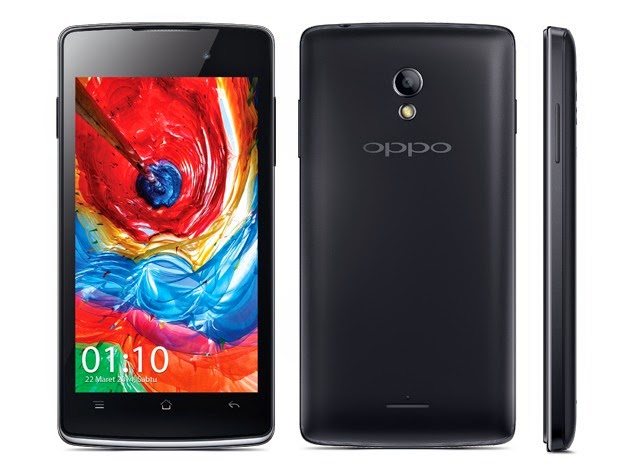
DESIGN: We start with the overall shape and size of the two devices. OPPO Joy is 124x63x9.9mm and weighs 125g where as Huawei Ascend Y530 comes in size 132X67X9.3mm and weighs 145g, about 20gm heavier than OPPO Joy. Both, Oppo Joy R1001 and Huawei Ascend Y530 are similar looking, bar shaped devices, curved at all four ends, but with larger length and width and lesser thickness, Huawei gives a relatively sleeker look. Both the models come in black and white colour variants, however, Huawei Ascend Y530 brings in an added colour statement as its black variant comes with a tint of red at the base and the top and the white variant with a silver tint at the base and the top. Design and colour are a matter of personal preference.
DESIGN: We start with the overall shape and size of the two devices. OPPO Joy is 124x63x9.9mm and weighs 125g where as Huawei Ascend Y530 comes in size 132X67X9.3mm and weighs 145g, about 20gm heavier than OPPO Joy. Both, Oppo Joy R1001 and Huawei Ascend Y530 are similar looking, bar shaped devices, curved at all four ends, but with larger length and width and lesser thickness, Huawei gives a relatively sleeker look. Both the models come in black and white colour variants, however, Huawei Ascend Y530 brings in an added colour statement as its black variant comes with a tint of red at the base and the top and the white variant with a silver tint at the base and the top. Design and colour are a matter of personal preference.
DISPLAY SCREEN: OPPO Joy has 4.0” IPS TFT screen that comes with a resolution
of 800X480 pixels. The multi-touch, capacitive touch screen is highly sensitive
with the glove mode feature that enables access to the screen and operate the
phone using gloves. It also comes with added smart function of Gesture Panel
that allows users to go to a desired App by drawing a simple picture on the
gesture panel. On the other hand, Huawei Ascend Y530 has a larger 4.5” screen with
comparable 854x480 pixels but without any added smart features.
OPERATING SYSTEM (OS): Both the devices run on Android Jelly bean, though Huawei
Ascend Y530 features Android 4.3 where as OPPO Joy lags behind with Android 4.2
version. Although Ascend has a leg up, both OS are a bit oldish considering
that more latest Android versions are now available and being used by various smartphone
makers.

PROCESSOR: OPPO Joy R1001 has a MediaTek MT6572 1.3 GHz Dual-Core processor with 512MB of RAM where as Huawei Ascend Y530 carries a MSM8210 1.2 GHz Dual-Core processor with 512MB of RAM, which gives OPPO Joy a slight edge in terms of clock speed. Both the devices have an internal storage of 4GB, expandable up to 32GB via a micro-SD card. On the whole, both the devices are more or less comparable on these accounts.
PROCESSOR: OPPO Joy R1001 has a MediaTek MT6572 1.3 GHz Dual-Core processor with 512MB of RAM where as Huawei Ascend Y530 carries a MSM8210 1.2 GHz Dual-Core processor with 512MB of RAM, which gives OPPO Joy a slight edge in terms of clock speed. Both the devices have an internal storage of 4GB, expandable up to 32GB via a micro-SD card. On the whole, both the devices are more or less comparable on these accounts.
CAMERA & BATTERY: Both the devices have comparable 3MP primary cameras with soft light flash
support and 0.3MP secondary cameras. Also, the battery capacity
in both the devices is about the same: OPPO Joy comes with a removable 1700mAH Li-Ion
battery where as Huawei Ascend has a slightly better 1750mAH Li-Ion battery but
without the option of replacing the same with a higher power battery.
CONNECTIVITY & OTHER FEATURES:
On the connectivity front, Huawei Ascend Y530 has a WiFi 802.11 b/g/n
support, Bluetooth 4.0 and high speed USB support. OPPO JOY too has the same
WiFi but it comes with Bluetooth 2.1EDR support. Furthermore, OPPO Joy R1001 supports additional
features like Distance Sensor, Light Sensor and G-Sensor where as Huawei Ascend
Y530 comes with Accelerometer, Proximity Sensor and Ambient Light Sensor.
CONCLUDING REMARK: We note that Huawei Ascend Y530 has the design advantage of being sleeker with a colour statement, larger display screen, relatively more advanced OS and slightly higher battery capacity, where as OPPO Joy comes with a slightly advanced version of the processor and offers new features such as the glove mode feature and the gesture panel. Finally, we also noted the price at the Kenyan e-commerce portal, Jumia. Both the devices are priced about the same; Huawei Ascend Y530 is marked at KSh10,500 where as OPPO Joy R1001 costs around KSh11,000. On the whole, the two devices are more or less comparable, with Huawei acquiring slight edge on more fronts than OPPO.


 Posts
Posts

