Showing posts with label Obi Wolverine S501. Show all posts

Monday, 22 June 2015

Obi Wolverine is a better deal than Samsung S Duos 2 in Kenya

This comparative review focuses on two mid-range smartphones that are competing against each other in East Africa, particularly Kenya. Samsung S Duos 2 has been a choice of many for a long time in Kenya, where as Wolverine S501 from Obi Mobiles, a company co-founded by John Sculley, ex-CEO of Apple and PepsiCo, has entered the Kenyan market in March this year. In spite of being new Obi Mobiles, as the review indicates, stands a good chance to give a healthy competition. So, as part of our comparative review series, in this review we compare Samsung S Duos 2 with Obi’s Wolverine S501.
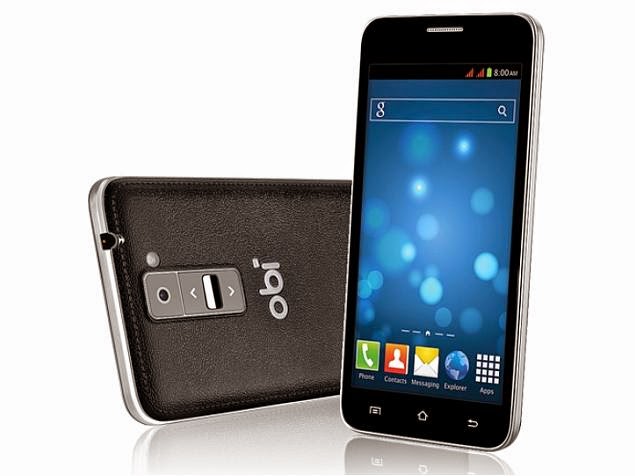
Design: In the first look, we note that Samsung S Duos 2 (Size: 121.5X63.1X10.57mm) is comparatively much smaller looking device than Obi’s Wolverine (Size: 144X73X9.6mm) and weighs much lighter too, just 118g as compared to Obi’s 167g. With such dimensions, Samsung Duos fits well in the hand and easy to carry around, however, larger size is not necessarily a disadvantage, probably more of a matter of preference. Moreover, Duos 2 has a metallic body finish and comes in white and black colours, where as Wolverine comes in impressive black, leather-like cover that protects the device from cracks and scratches.

Display: The overall size seems to reflect in the display screen size, which is 4 inch in case of Samsung S Duos 2, where as Wolverine offers with a screen size of 5 inch; a significant one inch difference obviously means larger visuals. Moreover, while Duos comes with a display with TFT technology and a screen resolution of 420X800 pixels, Wolverine S501 has a TFT IPS Screen with capacitive touch with a screen resolution of 480X854 pixels. Given its larger screen size, superior display technology and slightly higher resolution, Obi’s Wolverine takes a slight lead on the visual experience front.


OS & Processor: Samsung Duos 2 runs on Android v4.2.2 Jelly Bean packed with a 1.2 GHz Cortex-A9 processor, where as Wolverine S501 runs on Android KitKat (4.4), powered by a MeditaTek MTK6572 1.2 Ghz dual-core processor, that gives it an accelerated touch screen and superior performance. On the OS front too, Wolverine has a leg up over Samsung Duos.

RAM & Storage: Samsung S Duos 2 comes with a mere 0.75GB of RAM and 8GB of internal storage that luckily Samsung gives you an option of expanding up to 64GB, however, a low RAM and extra storage option can make the performance of the device suffer. Obi Wolverine S501, on the other hand, has a more balanced 1GB RAM support and 4 GB internal storage with external memory support up to 32GB via a MicroSD card.

Camera & Battery:  Samsung S Duos 2 sports a 5MP primary camera with flash. It also has a VGA secondary camera which with time has run out of fashion. Obi Wolverine S501 sports a 5MP primary camera placed in the middle of the device and comes with a LED flash. It also has a 0.3MP secondary camera. On the battery front, both Samsung S Duos and Obi Wolverine S 501 have removable batteries with 1500 mAh capacity that gives you a standby time of 280hrs in Duos and 180hrs in Wolverine. While Obi Wolverine takes a lead on the camera front, Samsung S Duos 2 claims better standby time.

Connectivity: On the connectivity front, both Samsung S Duos 2 and Obi Wolverine S501 are dual-sim phones, Wolverine being the smart one for it has 3G support for both the sim-cards, where as Duos 2 uses one as 2G and the other as 3G. Both the smartphones have WiFi 802.11/b/g/n and Bluetooth v4.0 support.

Conclusion: Both the devices are pretty much comparable on most of the indicators, however, there are specific differences. Samsung S Duos 2, with a certain brand value, would appeal to those looking for an elegant, easy to carry, smaller looking device, where as Obi’s Wolverine would appeal to those looking for a device that could afford better visual experience, especially youngsters who like to watch videos on the smartphone. The leatherish feel in the Wolverine design is unique too. In addition, Obi’s Wolverine has the advantage of superior OS, higher RAM and superior secondary camera.

Price: Finally, we look at the price in the Kenya market, where Samsung S Duos 2 is marked around 11,500KSh, where as Obi’s Wolverine S501 is at around 9000KSh. Therefore, unless there is specific brand priority and design preference, we find Obi Wolverine to be a better overall deal considering the specifications and the price point at which it comes.
Thursday, 21 May 2015

OPPO’s Joy needs to watch Obi’s Wolverine in Africa

Riding on their significant success in the Middle Eastern markets in a short time, Obi Mobiles, led by former Pepsi Co and Apple CEO John Sculley, launched its eight smartphone-models in Kenya and Tanzania. African market already has established players like Huawei, Samsung, HTC, Tecno and OPPO, therefore it would be interesting to see how Obi manages to create its footprints in the region. At the end, it is the quality of the product that provides credibility. In this context, we have been comparing various Obi models with the competing models to examine the relative quality of the products. In the current review, we have put Obi’s Wolverine S501 up against OPPO’s Joy R1001, with the intention to help customers make a smart choice.
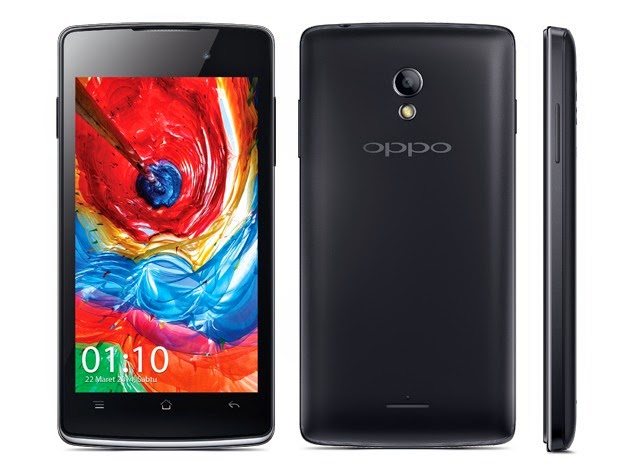
At the very outset we realize that there is visible different in the size and weight of the two devices. With physical dimensions of 124x63x9.9mm OPPO’s Joy comes out as a smaller device than Obi’s Wolverine with dimensions 144x73x9.6mm. On one hand, this difference in physical dimensions reflects in the weight of the devices, making Obi’s Wolverine (167gms) about 42gms heavier than OPPO’s Joy (125gms). On the other hand, it shows up in the size of the display screen, which is an inch smaller in case of OPPO’s Joy (4inch) than Obi’s Wolverine (5inch). However, in both cases the resolution is about the same; Obi’s Wolverine comes with 480x854 Pixels where as OPPO’s Joy with 480x800 Pixels. Therefore, the trade off is between a bigger and heavier device with a larger display and a relatively shorter and lighter device with an inch of smaller display. While both the devices come in black and white, Obi’s Wolverine has this unique leather-like texture at the back. 

At the performance level, OPPO’s Joy seems to lag behind as it comes with an operating system that runs on a slightly outdated Android 4.2 (ColorOS) compared to Obi’s Wolverine that runs on Android 4.4 KitKat. However, OPPO’s JOY takes a leg up over Obi’s Wolverine in terms of processor where JOY has a Cortex A7 1.3GHz dual-core processor while Wolverine has a MediaTek MTK6572 1.2GHz dual-core processor. But then JOY loses out on RAM with 512 MB RAM when Wolverine can boast of 1GB RAM. In terms of storage, both the devices have same internal memory of 4GB and an expandable memory upto 32 GB through microSD. While JOY (with 1700mAh) has a slight upper hand in terms of battery capacity over Wolverine (with 1500 mAh), a relatively advanced OS and larger RAM provide Obi’s Wolverine an edge over OPPO’s JOY. However, significant difference shows up again in the cameras; while both have the same 0.3MP front cameras, Wolverine comes with 5MP rear camera and Joy with 3MP.
In terms of Connectivity, both smartphones support Bluetooth, GPS and Wi-Fi (802.11 b/g/n). But JOY additionally provides Wi-Fi Hotspot while Wolverine does not. Both devices provide 2 SIM card slots, but JOY has 1 Regular SIM card slot and 1 Micro SIM card Slot which means the consumer is forced to change their existing SIM card(s) to Regular or Micro. Wolverine on the other hand allows users to use either Regular or Micro SIM in the same slot. In terms of Wireless Networks both Wolverine and JOY are available only on 3G: GSM 850/900/1800/1900 MHz and WCDMA 2100 MHz. Additionally, Wolverine is also available on 3G: WCDMA 850 MHz.

In this context, we finally look at the prices in the Kenya market, where Obi’s Wolverine is priced at around KSh12,000 where as OPPO’s JOY is priced around KSh11,000, a difference of about KSh1000. Given several advantages of a wider screen-size, higher OS, bigger RAM, superior rear camera, and the ability to use any form of SIM (Micro or SIM) without any hindrance, Wolverine’s slightly higher price could be justified. However, a smart customer could make the deal even smarter by pushing for a better price bargain.

Wednesday, 13 May 2015

Obi’s black Wolverine can sure beat Huawei’s colourful Ascend

In our endeavour to provide smartphone users in Kenya with insights about various smartphone brands and models, we have this time picked up devices from two players, including an established player, Huawei, and a rather new entrant in the African smartphone market, Obi Mobiles. While the Chinese company Huawei has already carved out a name for itself in Africa, Obi Mobiles is trying to capture the attention of African smartphone users with its recently introduced smartphone range named after wild animals, the animal series. The models that we have picked for the comparative review are  Huawei’s Ascend Y530 and Obi’s Wolverine S501 for reasons that would become obvious the review progresses. 
In general, Huawei's Ascend Y530 stands out as a smaller and lighter device than Obi's Wolverine S501. While Wolverine is 144x73x9.6mm and weighs 167gm, Ascend is significantly shorter (132.5x67x9.3mm) and also weighs lighter (145gm). Also, Huawei’s device comes with 4.5 inch LCD auto-rotate (G-sensor) display where as Obi’s device has a 5 inch TFT IPS Screen with capacitive touch. Both the smartphones have a screen resolution of 480X854 pixels. The Ascend has its volume keys on the left side of the phone while as in Wolverine you have the feasibility of controlling volume through keys that are rightly placed on the back side of the phone, just below the camera. Furthermore, Huawei’s Ascend Y530 comes in red, yellow, black and white (plastic back) variants where as Obi’s Wolverine comes in impressive black, leather-like cover that protects the device from cracks and scratches. At this stage, the key distinguishing features include the display screen size, the location of the volume keys and the colour options.

When it comes to operating system (OS), Obi’s Wolverine S501, in sync with technology, runs on Google Android KitKat (4.4) that gives the smartphone an accelerated touch screen and superior performance while as Huawei’s Ascend Y530 lags behind as it runs on Android 4.3 Jelly Bean that is fading as the preferred choice of smartphone users. However, Ascend is powered by a Qualcomm SnapdragonTM Dual-Core 1.2GHz processor where as Wolverine by 1.2GHz Dual-Core Processor by MTK, which may give Ascend the advantage of popular perception. Furthermore, Ascend is equipped with 512MB RAM and an internal storage space of 4GB that can be expanded up to 32GB via MicroSD card. On the other hand, Wolverine comes with 1GB RAM and external memory support up to 32GB via a MicroSD card. At this stage, the key distinguishing features are a more advanced operating system and larger RAM.
To cater to users’ photography needs, Obi’s Wolverine sports a 5MP primary camera placed in the middle of the device and comes with a LED flash. It also has a 0.3MP secondary camera. Similarly, Huawei’s Ascend also comes with 5MP of primary camera in the back with a flash and 0.3MP of secondary camera. Furthermore, Obi’s Wolverine is equipped with a 3.7Li-on removable battery with 1500mAh capacity, where as Huawei’s Ascend carries a Li-on battery capacity of 1750mAh, which is advantage Ascend. However, Wolverine comes with two SIM slots, both 3G enabled, where as Ascend offers space for only one, mini SIM card. Both the phones serve the purpose by offering Bluetooth 4.0 version, WiFi and 2.0 USB slots. At this front, the distinguishing features are the battery capacity and SIM slots; if Huawei has a slight edge in battery capacity, Wolverine takes lead in terms of SIM slots.

In the spec-to-spec match Obi’s Wolverine does take lead on many important counts such as display screen size, operating system and RAM, double SIM option while slightly lagging in battery capacity. However, the biggest distinguishing point between Huawei’s Ascend Y530 and Obi’s Wolverine S501 is the the price tag that the two devices carry in Kenyan market. While Huawei’s Ascend is priced around KSh14,000, Obi’s Wolverine is a steal at little over KSh 9000, if one is ready to go with impressive black.